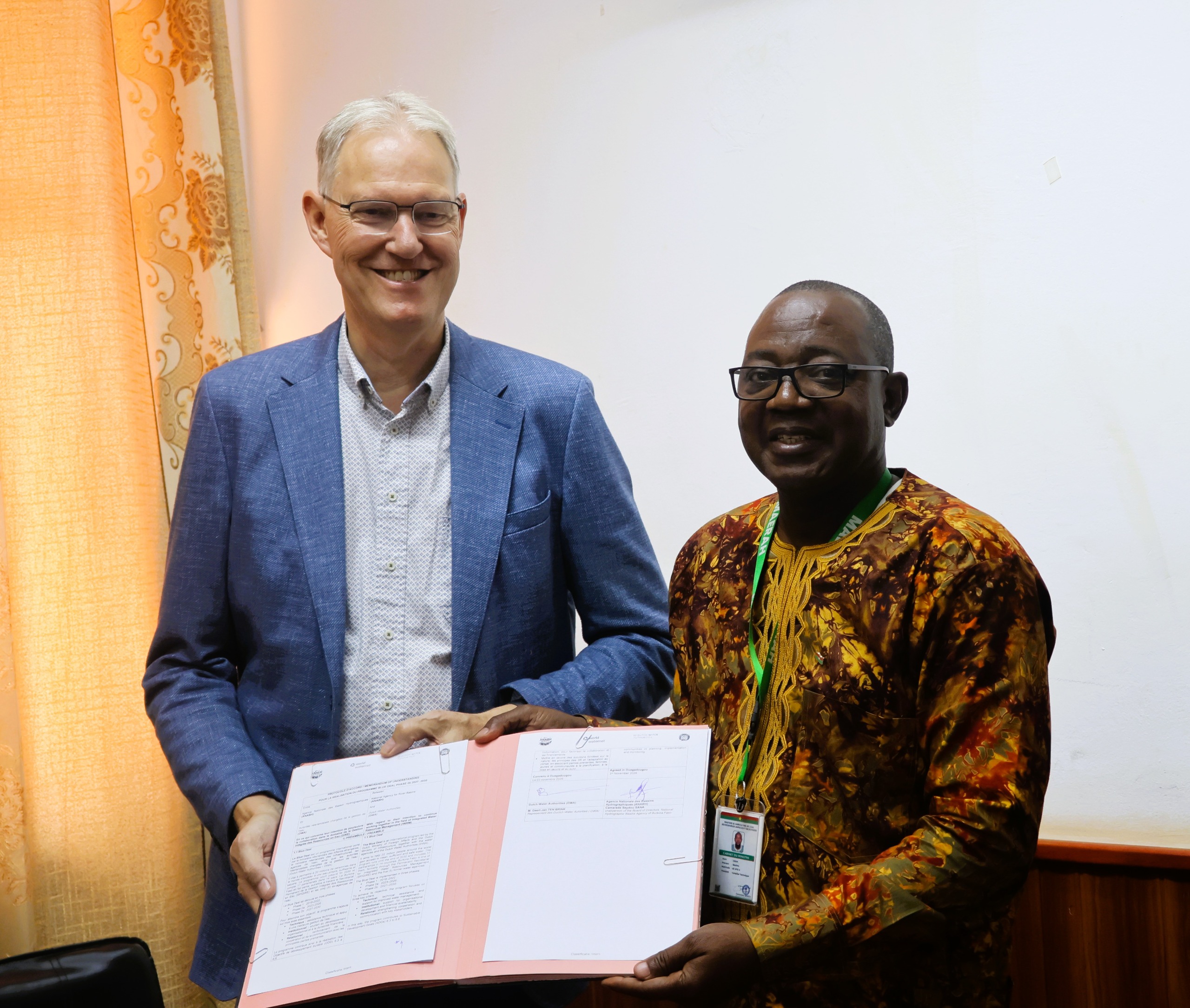
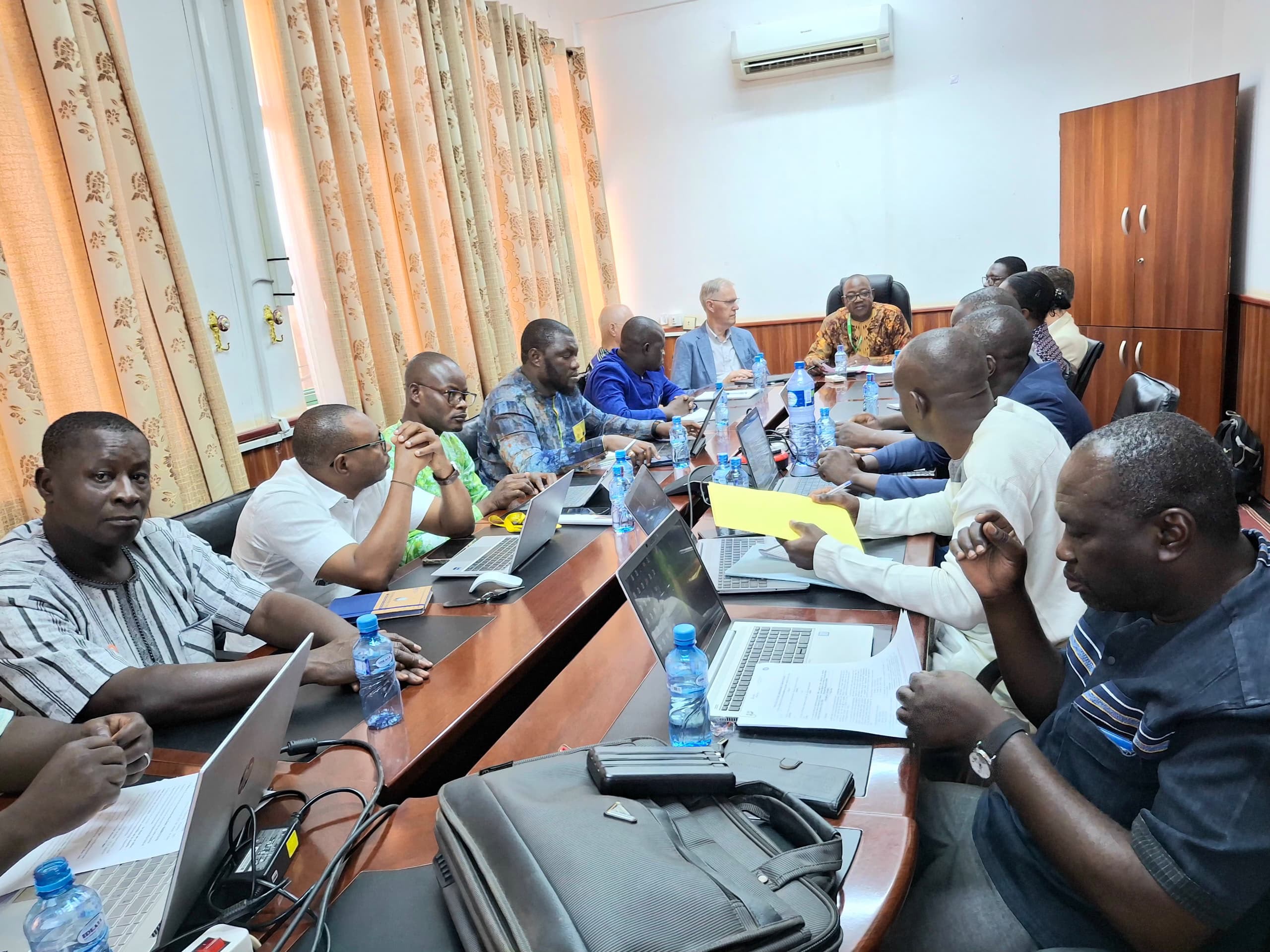
On 3 November 2026, the Agence Nationale des Bassins Hydrographiques (ANABH) and Dutch Water Authorities signed a Memorandum of Understanding in Ouagadougou, confirming their commitment to continue the Blue Deal partnership in Burkina Faso until 2030. The agreement was signed by Seydou SANA on behalf of ANABH’s Board of Directors and by Geert-Jan ten Brink, on behalf of the Dutch Water Authorities. It sets out cooperation on basin planning, water monitoring, conflict prevention, reservoir management, institutional strengthening and climate adaptation.
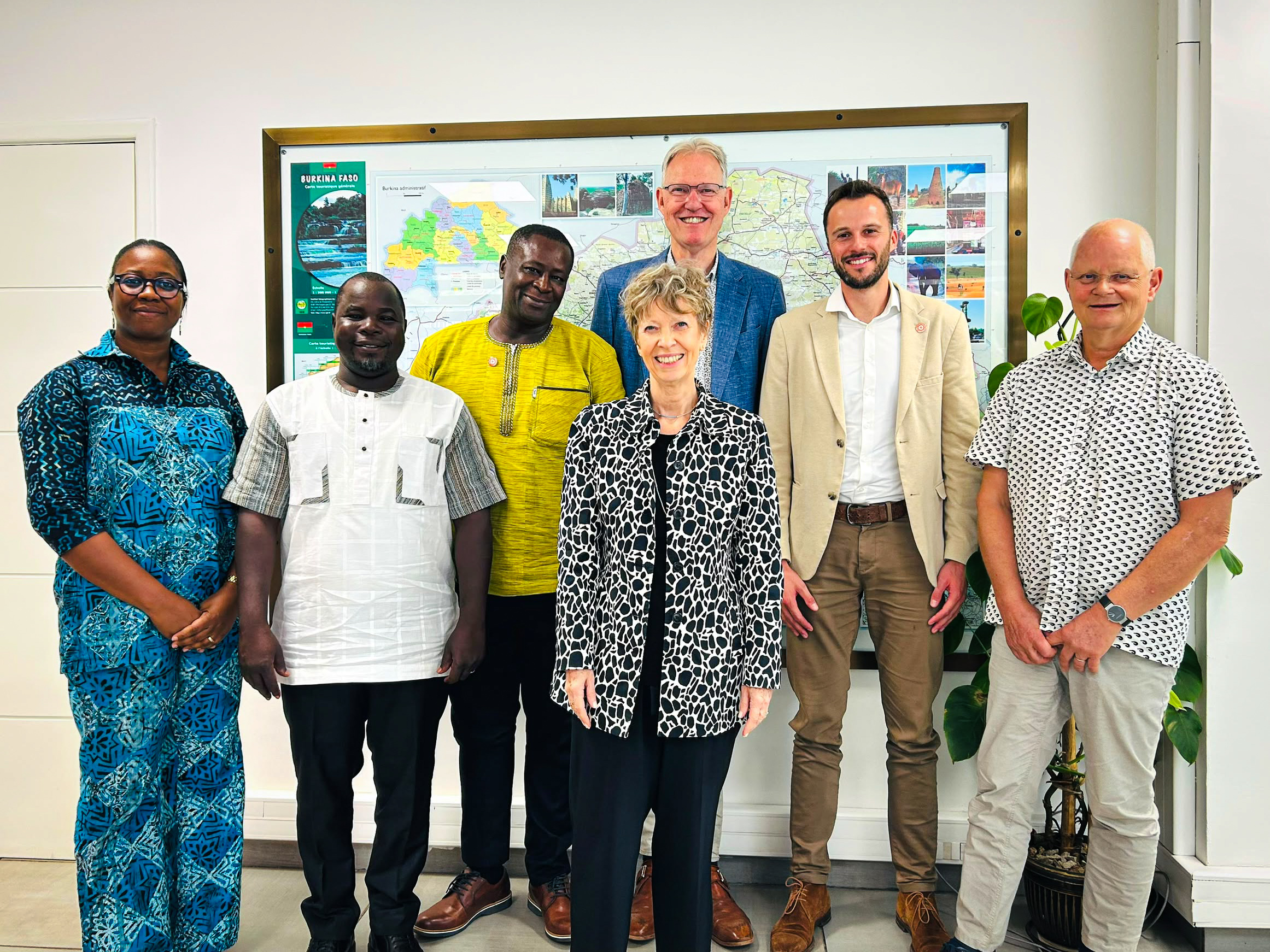
The signing formed part of a broader mission to Burkina Faso from 2 to 4 November by representatives of Amstel, Gooi en Vecht and Hunze en Aa’s, representing Dutch Water Authorities within the Blue Deal programme. The agreement follows a major reform of Burkina Faso’s water governance system and reflects the continued commitment of ANABH, Dutch Water Authorities, World Waternet to the partnership under the new institutional structure
Restructuring within the Burkinabe Water Sector
Burkina Faso has pursued Integrated Water Resources Management for several decades. The creation of the Agence Nationale des Bassins Hydrographiques (ANABH) marks a significant change in how this work is organised. The five former water agencies of Nakambé, Gourma, Liptako, Comoé and Mouhoun have been brought together under ANABH, which combines central management and strategic coordination with three regional branches: Nakambé, Mouhoun-Comoé and Liptako-Gourma. These branches are responsible for operational water resources management in their respective river basins. The reform aims to strengthen coordination, improve efficiency and support more sustainable water management across the country. This transition also provided a natural moment to renew the Blue Deal partnership, which has supported Dutch-Burkinabè cooperation since 2019.
New structure, same commitment, renewed collaboration
Although Burkina Faso’s institutional structure has changed, the commitment behind the partnership remains the same. During the three-day mission, the partners clarified their roles within the new structure, reviewed progress and discussed the programme for 2027. The MoU formalises their renewed cooperation until 2030 and provides a shared framework for improving water quality and availability, strengthening river-basin planning and advancing climate adaptation.
From governance to the field
The programme deliberately connected institutional discussions with practice. In the Green Belt of Ouagadougou, the delegation saw how sustainable agriculture and landscape restoration can help tackle erosion and improve the use of natural resources. Elsewhere in Burkina Faso, Blue Deal partners are testing measures such as Vetiver planting, gully rehabilitation and measures to improve water infiltration. Monitoring and research should show what works, under which conditions, and what can be scaled up.
A shared vision for the Nakanbé-White Volta Basin
The visit also looked beyond Burkina Faso. Burkina Faso and Ghana share the White Volta basin, known as the Nakanbé in Burkina Faso. What happens upstream affects users downstream. Recent Blue Deal exchanges between both countries show the value of learning from each other's approaches to erosion control, watershed restoration and Nature-based Solutions.
At the Embassy of the Kingdom of the Netherlands in Ouagadougou, the delegation joined partners to reflect on progress under the current Blue Deal programme and discuss priorities beyond 2027. A key message from the discussions was that challenges such as water scarcity, land degradation and climate resilience require sustained, long-term action. Rather than stand-alone interventions, projects must build on one another, reinforce each other's results and contribute to a shared vision for the Nakanbé-White Volta basin.
Planting for the future
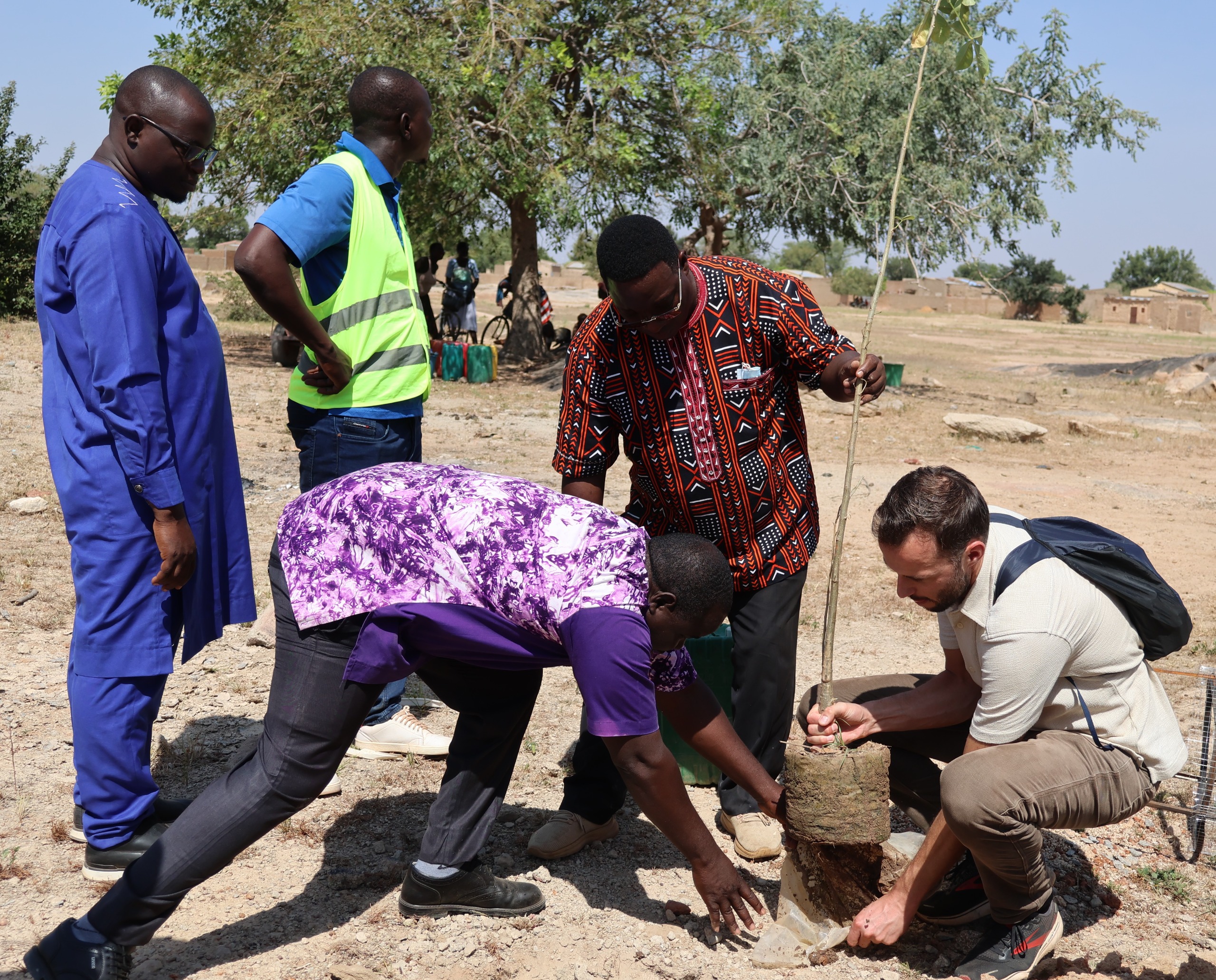
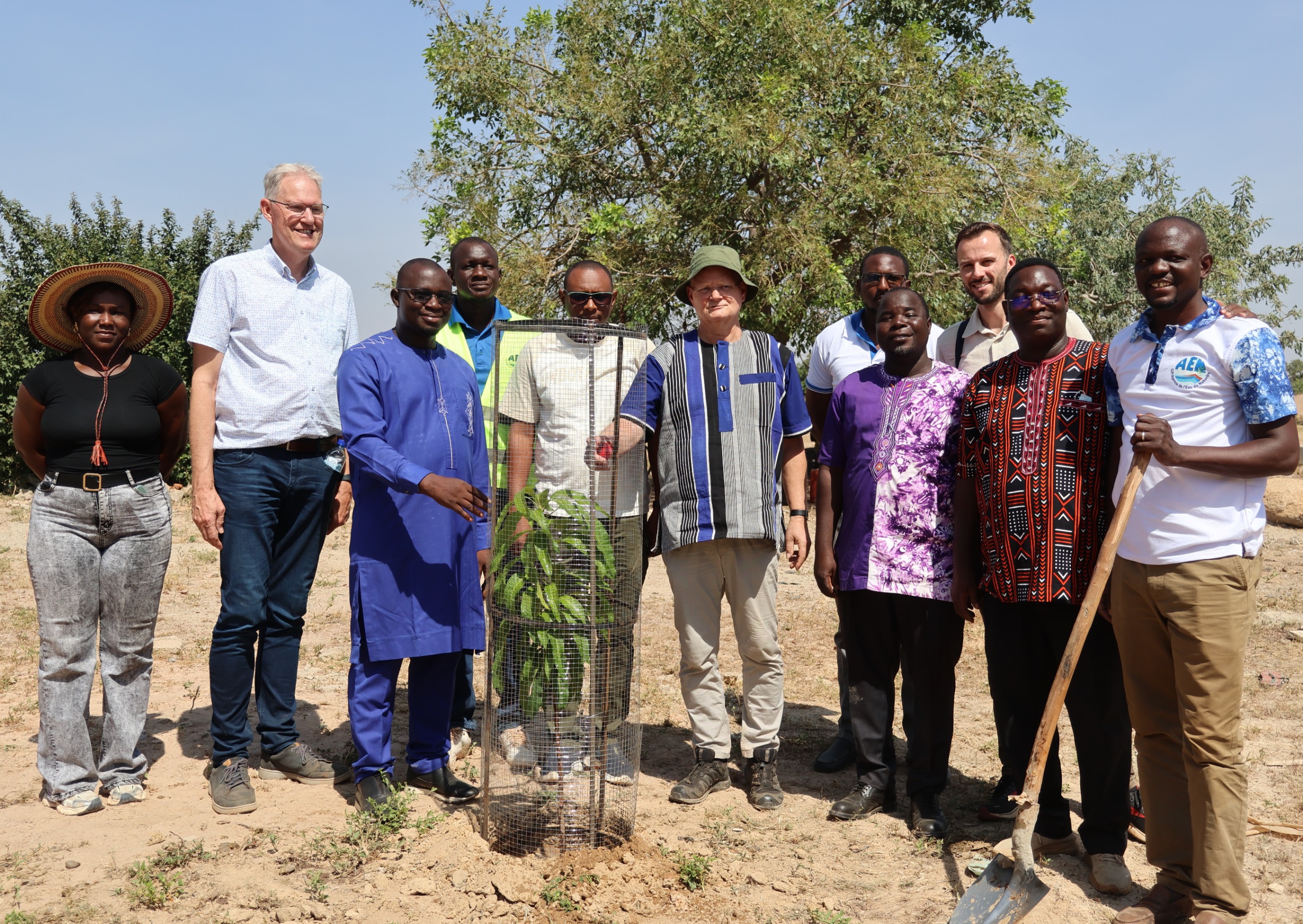
The working visit ended at the new ANABH office and the Loumbila dam. At the ANABH premises, partners planted trees to mark the renewed cooperation. After three days of discussing organisations, programmes and plans for the coming years, it was a simple and tangible closing gesture.
The symbolism fits the partnership. A young tree needs time, attention and the right conditions to grow. The same applies to cooperation. There is already a strong foundation. The task now is to turn it into lasting results: stronger water institutions, healthier catchments, greater climate resilience and sustainable management of Burkina Faso's water resources.
The structures may change, but the shared challenge remains the same: managing water together, for the long term.