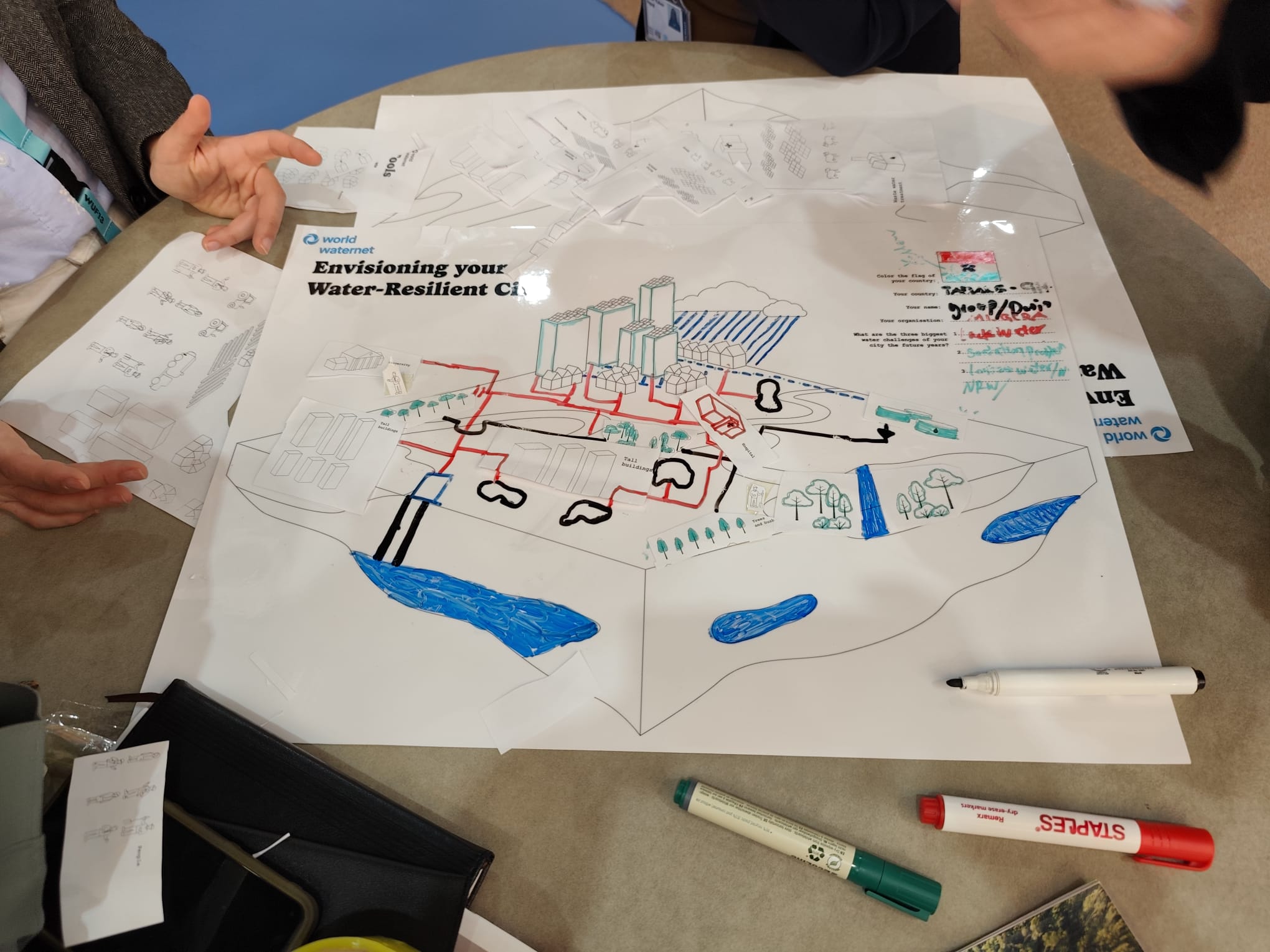
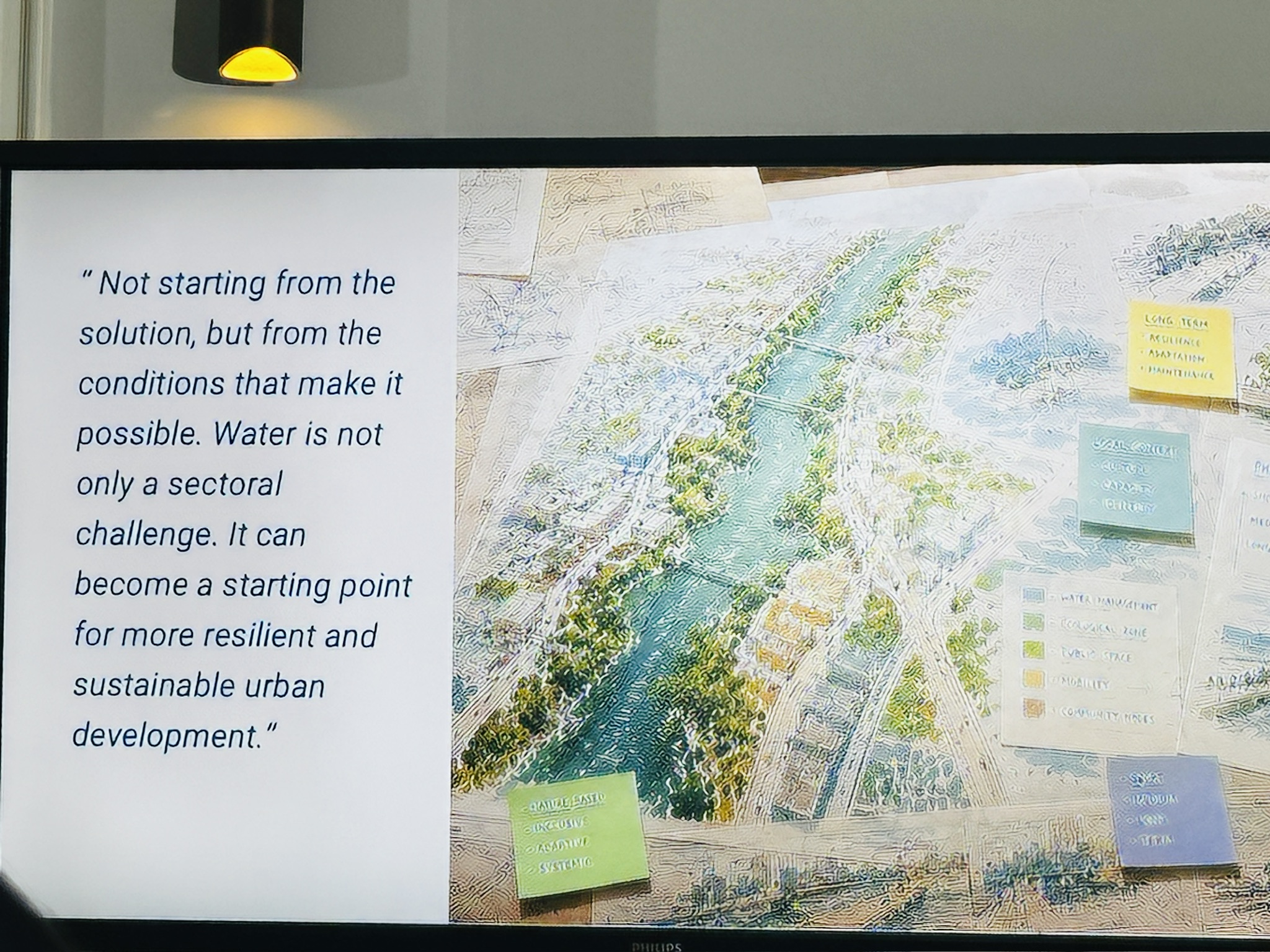
In Madrid this May, World Waternet joined two major conversations on the future of water: the Global Water Summit and the Organisation for Economic Co operation and Development (OECD) Roundtable on Financing Water at the Banco de España. What we found was not a sector searching for relevance. Instead, it is a sector at a turning point. New thinking, new financial models and new political attention are starting to come together. Delivering the Water Transition requires systems thinking and collaborative action – moving beyond traditional norms. Madrid made one thing clear: water is moving to the centre of how we think about resilience, growth and global stability.
The intellectual backbone
A big part of this shift comes from the Global Commission on the Economics of Water. Its landmark report argues that the hydrological cycle should be valued as a global common good. Because if we keep treating water as an afterthought, we are not heading towards a resilient future, but towards a far more fragile one. That matters because the global water crisis is no longer just a water sector issue. It affects food, public health, economic growth, displacement and financial stability. The report makes the case for seeing water as a systems issue and for acting across five connected missions, from food systems and ecosystems to circular water use, clean energy and safe water for children. For World Waternet, this is highly relevant. Our work in Water Operators’ Partnerships connects directly to this agenda, since our integrated water cycle approach speaks to all five missions.
The new operational engine
Just weeks before Madrid, on 15 April 2026, the World Bank Group launched the Water Forward initiative at its Spring Meetings in Washington. This new initiative aims to improve water security for one billion people by 2030. Its main delivery model is the country-led Water Compact. These compacts are designed to bring policy reform, stronger institutions and investment planning together in one framework. Fourteen countries joined the first wave. For World Waternet, this is not abstract. Kenya and Jordan, where we already work through Water Operators’ Partnerships, are part of this first group. That is important. It suggests that countries where utility partnerships have already helped build capacity are now stepping forward into larger national reform processes.
Water Forward also uses a language that is becoming more common across the sector: water as a driver of jobs, productivity, resilience and investment. This is also a strong reminder that while the water agenda is a global ambition, the implementation of the water transition requires local action, working together with a diversified pool of stakeholders and providing concrete evidence of positive effect in consistence ways.
What we heard in Madrid
The message in Madrid was clear. There is not one water transition, but five that need to happen at the same time. We need to move from:
- A linear water economy to a circular one
- Outdated to Smart infrasturcture; powered by clean energy, data, and innovation.
- Grey to Green infrasturcture. We need to integrate nature in our water management.
- A competitive system to a collaborative one. Water does not stop at borders, we need to unite in implementing transboundary water governance models.
- Subsidies to Sustainable Financing. We need utitlities that are creditworthy, and recover their operational costs in full with fair pricing.
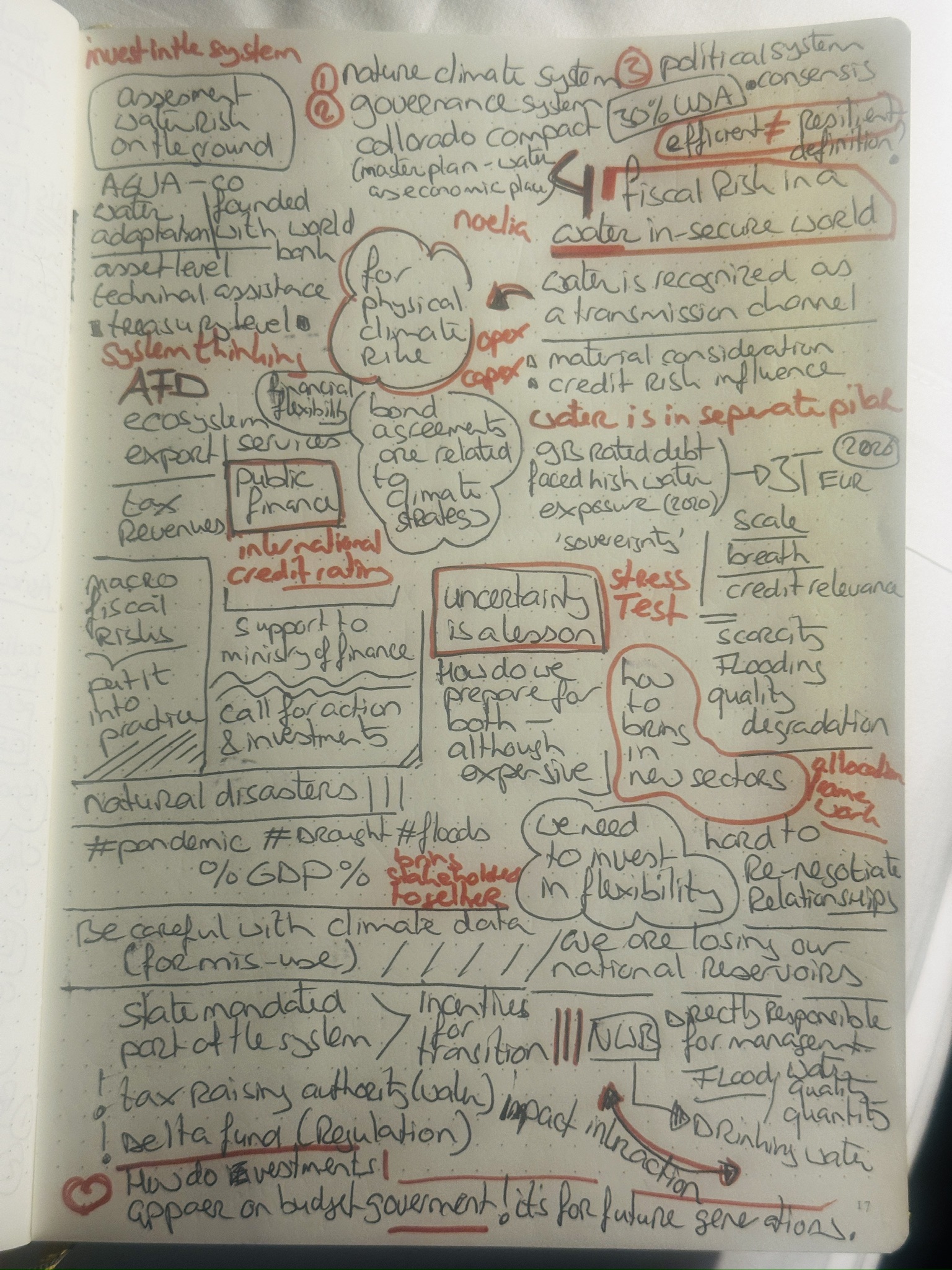
The Organisation for Economic Co-operation and Development (OECD) roundtable reinforced another important point. Water is now seen as a channel for financial risk. That means central banks, public finance institutions and investors have a real role to play. The issue is not simply a lack of money. It is a lack of alignment between finance, institutions and delivery.
The road ahead
Madrid was not the end of the story. It was the start of a sequence.
The next platforms, from Singapore to Bangkok to Dubai, all build towards Aquatech Amsterdam in March 2027, when World Waternet marks its 20th anniversary. Together, these moments create a clear narrative arc. Singapore shows our relevance in Asia. Dubai is the key political moment. Amsterdam brings the story home.
- In May 2026, we were in Madrid for GWS + OECD at Banco de España.
- From 15–19 June 2026, the next stop is Singapore International Water Week at Marina Bay Sands.
- From 25–27 November 2026, we will attend Aquatech Asia in Bangkok.
- From 2–4 December 2026, we will be at the UN Water Conference in Dubai, a key political moment.
- From 9–12 March 2027, Aquatech Amsterdam will take place at RAI Amsterdam, celebrating its 20th anniversary.
What we carry forward
The message is simple. The Global Commission on the Economics of Water gives us the intellectual case. Water Forward gives us the operational momentum. Madrid showed that finance, policy and practice are beginning to align. For World Waternet, this is a moment to be visible. Our role is not on the sidelines. Our experience in utility partnerships, institutional strengthening and integrated water cycle thinking is exactly what this new agenda needs. One of the most striking phrases from the Banco de España: financial models cannot fully map the complexity of water systems - because “the water does not know where it goes.” But we do. And that is why this moment matters.