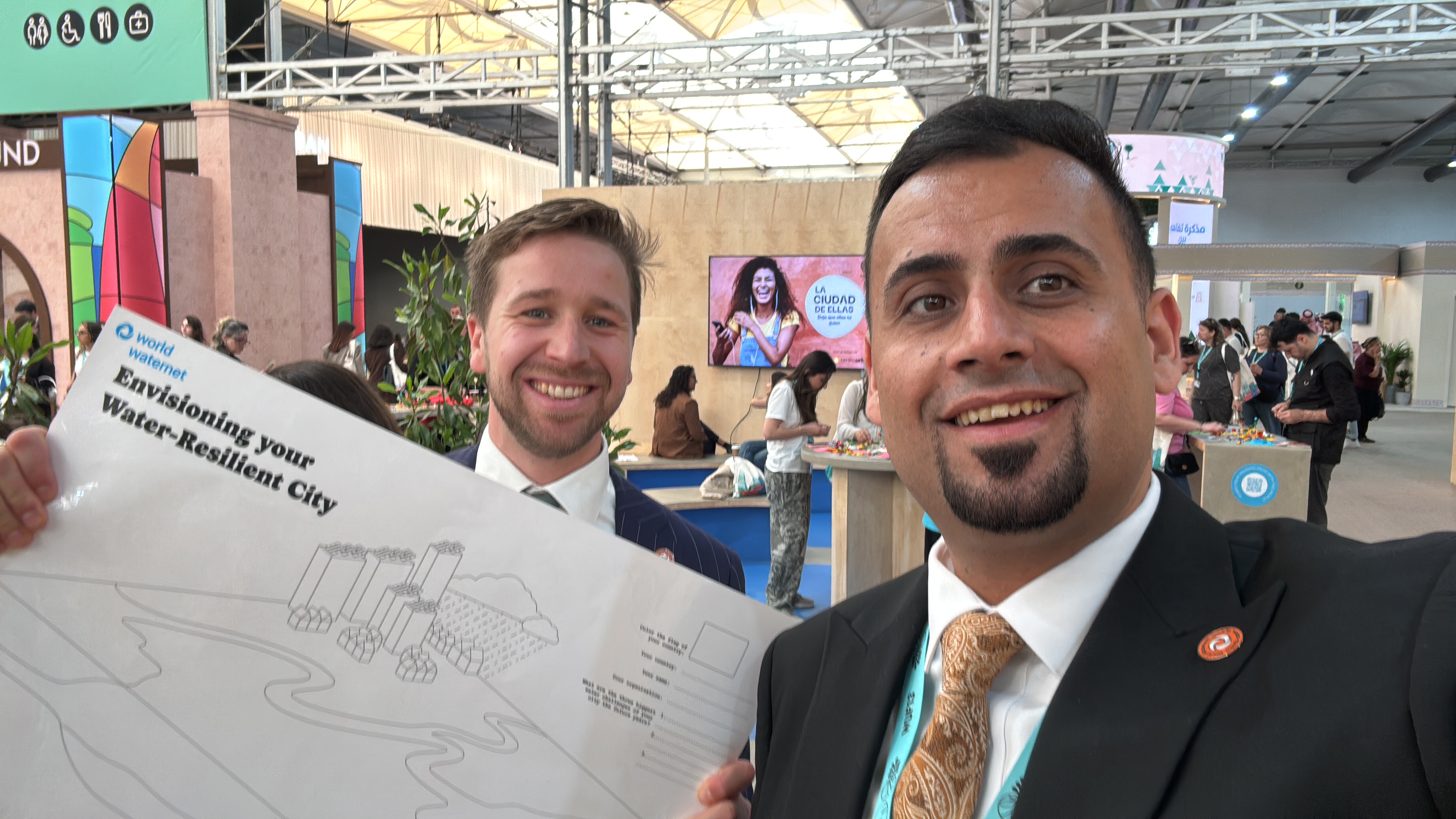
The World Urban Forum brought together global leaders, practitioners, and communities to address the future of cities. Representing World Waternet, Loay Alatrash and Pepijn van Loon set out with a clear goal: to ensure that water remains central to discussions on urban resilience.
Water is often invisible in city planning, hidden underground or treated as a purely technical domain. Yet every city depends on a functioning water cycle. Without it, challenges such as climate change, public health, and inequality become harder to address. In Baku, we worked to make water visible again, both in policy conversations and in people’s imaginations.
Swimmable cities: a vision that connects
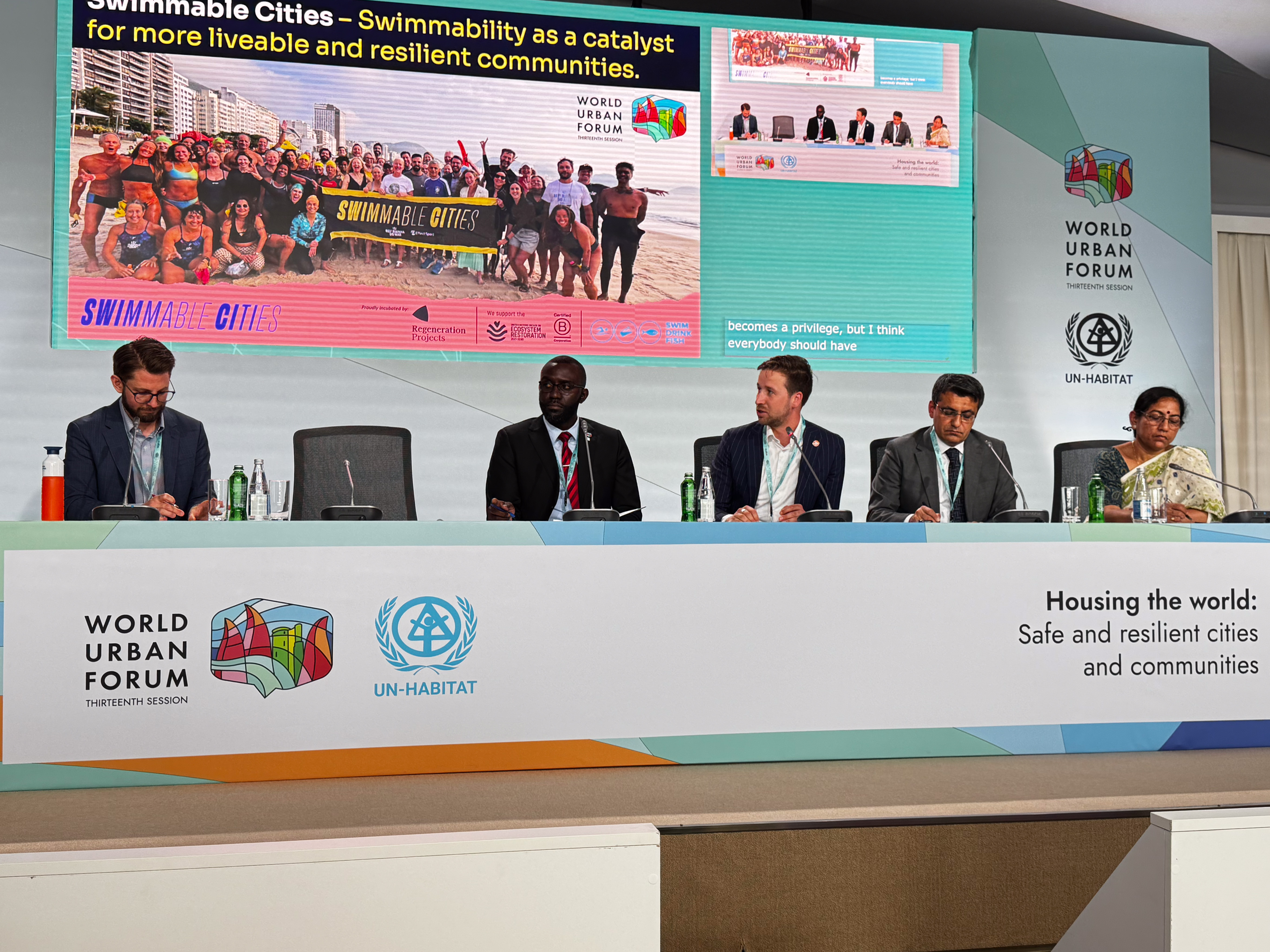
One of the key moments of the Forum was the Swimmable Cities session, where World Waternet contributed to a diverse panel including representatives from governments, utilities, and international organisations.
The idea behind swimmable cities is simple but powerful: if a river is clean enough to swim in, it signals that a city manages its water well. Water quality, wastewater treatment, ecosystem health, and public space all come together in this single, tangible goal.
During the discussion, Pepijn van Loon emphasised that swimmability offers “a dot on the horizon”, a shared vision that people can understand and rally around. Unlike abstract policy targets, the ability to safely enter and enjoy water resonates across cultures, income levels, and professional backgrounds.
The panel also highlighted that achieving swimmable waters requires more than infrastructure. Strong governance, collaboration across sectors, and community engagement are essential. In many cities, rivers are still heavily polluted or disconnected from daily life. Restoring them means addressing systemic issues, from wastewater management to urban planning and social inclusion.
Importantly, the conversation showed that swimmability is not a luxury. In many parts of the world, rivers are already deeply embedded in daily life, serving as sources of livelihood, culture, and identity. Making them safe and accessible is therefore both an environmental and social priority.
Envisioning water-resilient cities: from concept to creativity
While the panel provided a strategic vision, the heart of our contribution to the Forum was our interactive workshop: “Envision Your Water-Resilient City.”
Hosted in the UN-Habitat playground area, the session brought together more than 50 participants from diverse backgrounds. What made it unique was its approach: instead of focusing on technical presentations, we invited participants to actively engage with their own water cycle and translate it into a future vision.
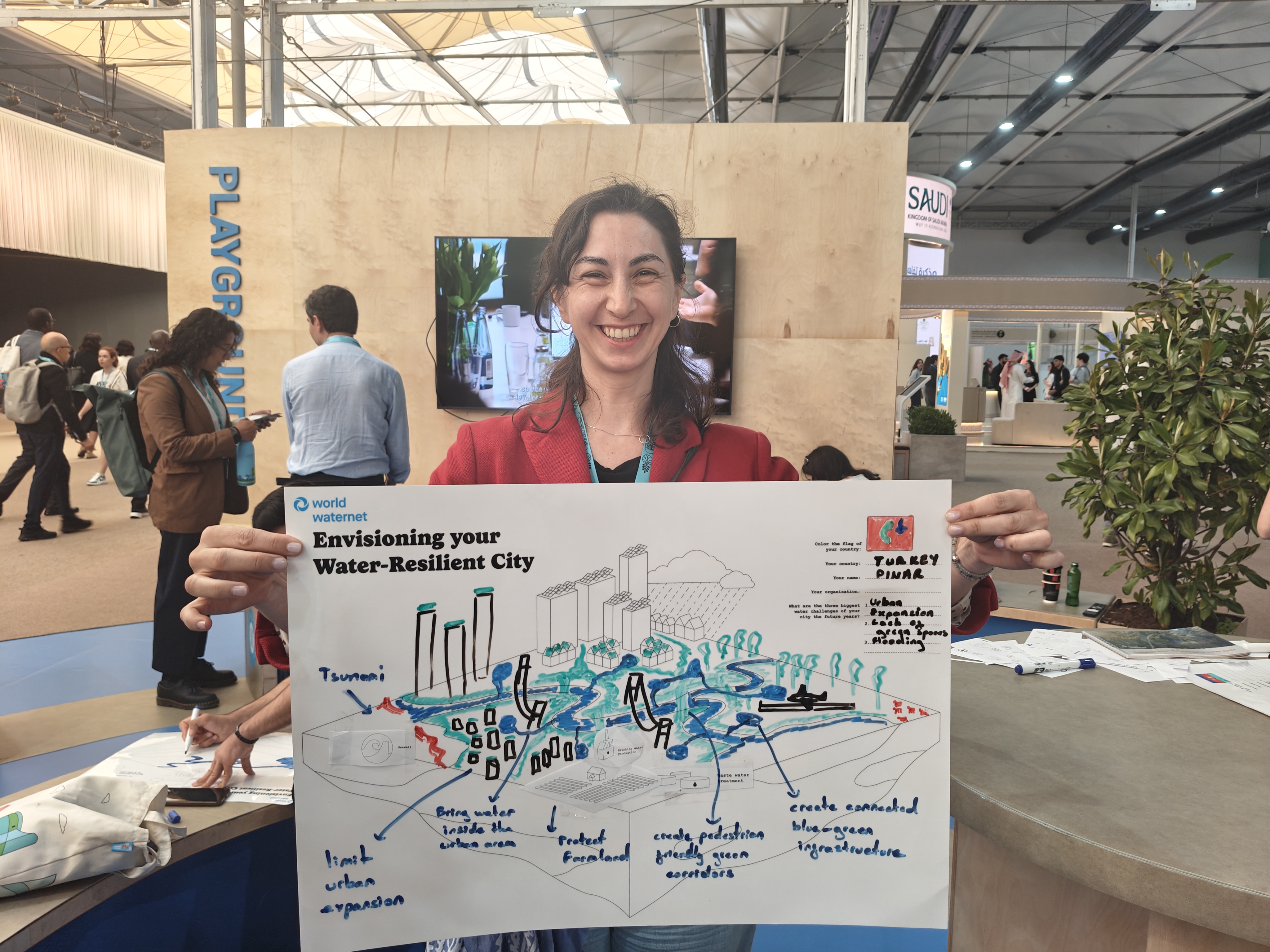
Through drawing and creative exercises, participants explored how water flows through their cities, from source to tap, from use to reuse, and back into the environment. They were encouraged to think about questions such as:
- How can cities better integrate water into public spaces?
- What would a climate-resilient city look like?
- How can water connect communities rather than divide them?
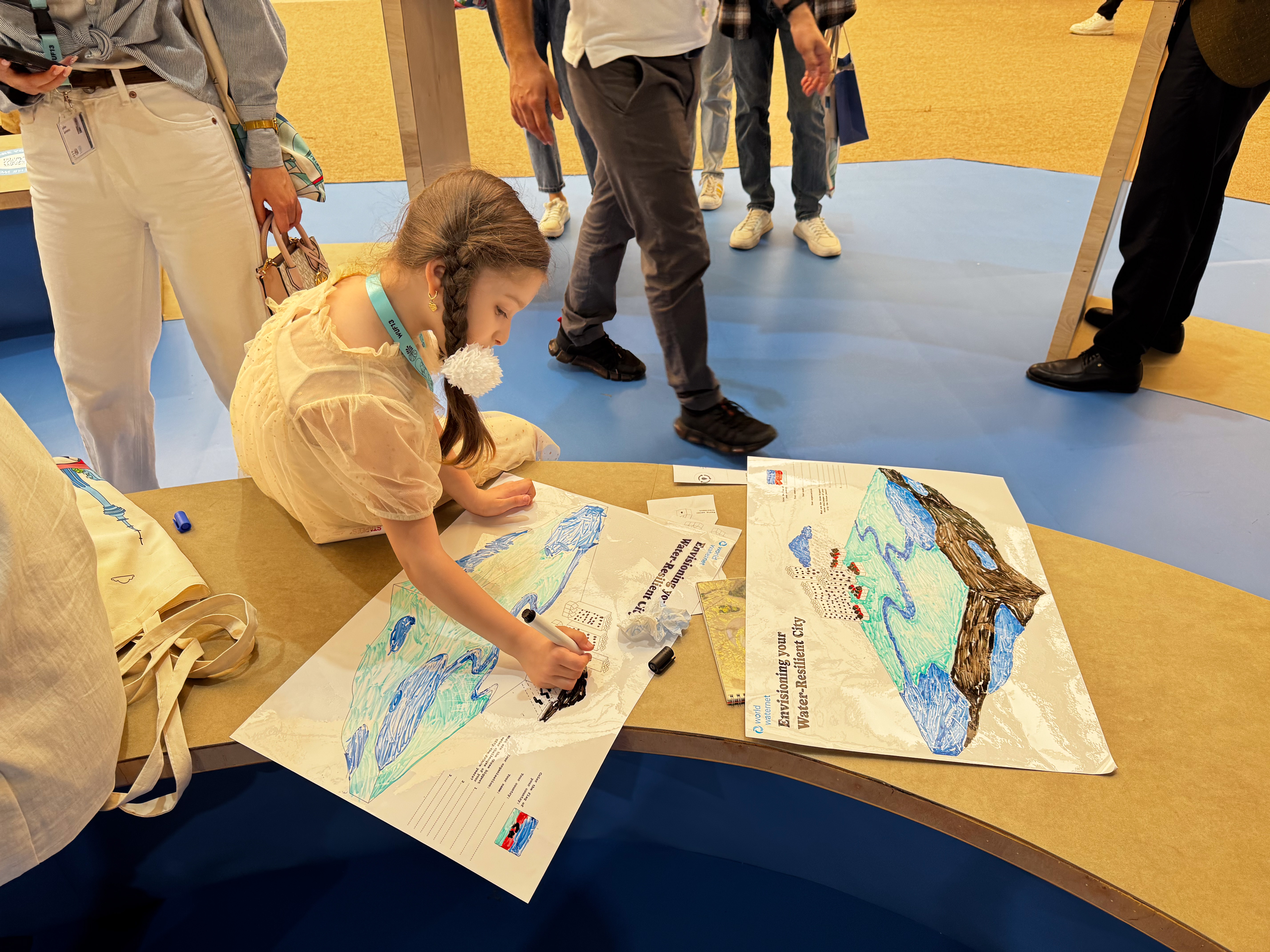
The results were as diverse as the participants themselves. Colourful drawings and bold ideas emerged, illustrating green-blue infrastructures, accessible waterfronts, circular water systems, and inclusive urban spaces.
One of the most inspiring aspects was the strong presence of young participants. Their openness and creativity underscored an important lesson: conversations about water resilience should not be limited to experts. They should be inclusive, engaging, and start early.
The workshop demonstrated that building resilient cities is about engineering solutions, and it is also about imagination, participation, and ownership. When people understand their water cycle, they are more likely to value and protect it.
This aligns closely with World Waternet’s approach: connecting technical expertise with local context and community engagement. By making water tangible and personal, we can inspire action that goes beyond policy frameworks.
The splash event: bringing words into action
On the final day of the Forum, the message of connection between people and water became tangible during the SPLASH event at the Caspian Sea.
Together with more than 100 participants, we entered the water, turning dialogue into experience. Among those present were Henk Ovink, former Special Envoy for Water of the Netherlands; Marianne de Jong, Dutch Ambassador; and Anacláudia Rossbach, Executive Director of UN-Habitat.
This moment captured what the Forum was ultimately about: bringing together policy, practice, and people. Standing (and swimming) side by side with global leaders and practitioners reinforced the idea that water connects us all, regardless of role or geography.
The Splash event was more than symbolic. It embodied the principles discussed throughout the week: accessibility, inclusivity, and the importance of safe, clean water. It showed that water is not just something to manage, but something to experience and share.
Looking ahead
Our time in Baku confirmed that the global water community is growing stronger and more connected. We are grateful to GWOPA for bringing us together with partners from around the world and enabling us to contribute to a shared narrative on water.
From strategic discussions to creative engagement and real-life experience, the Forum highlighted the many ways we can reconnect cities with their water cycles.
As we look ahead to the next World Urban Forum in Mexico, we carry forward one central message:
the water cycle must be at the heart of urban development.
By making water visible, engaging communities, and working collaboratively, we can build cities that are resilient as well as healthy, inclusive, and connected.