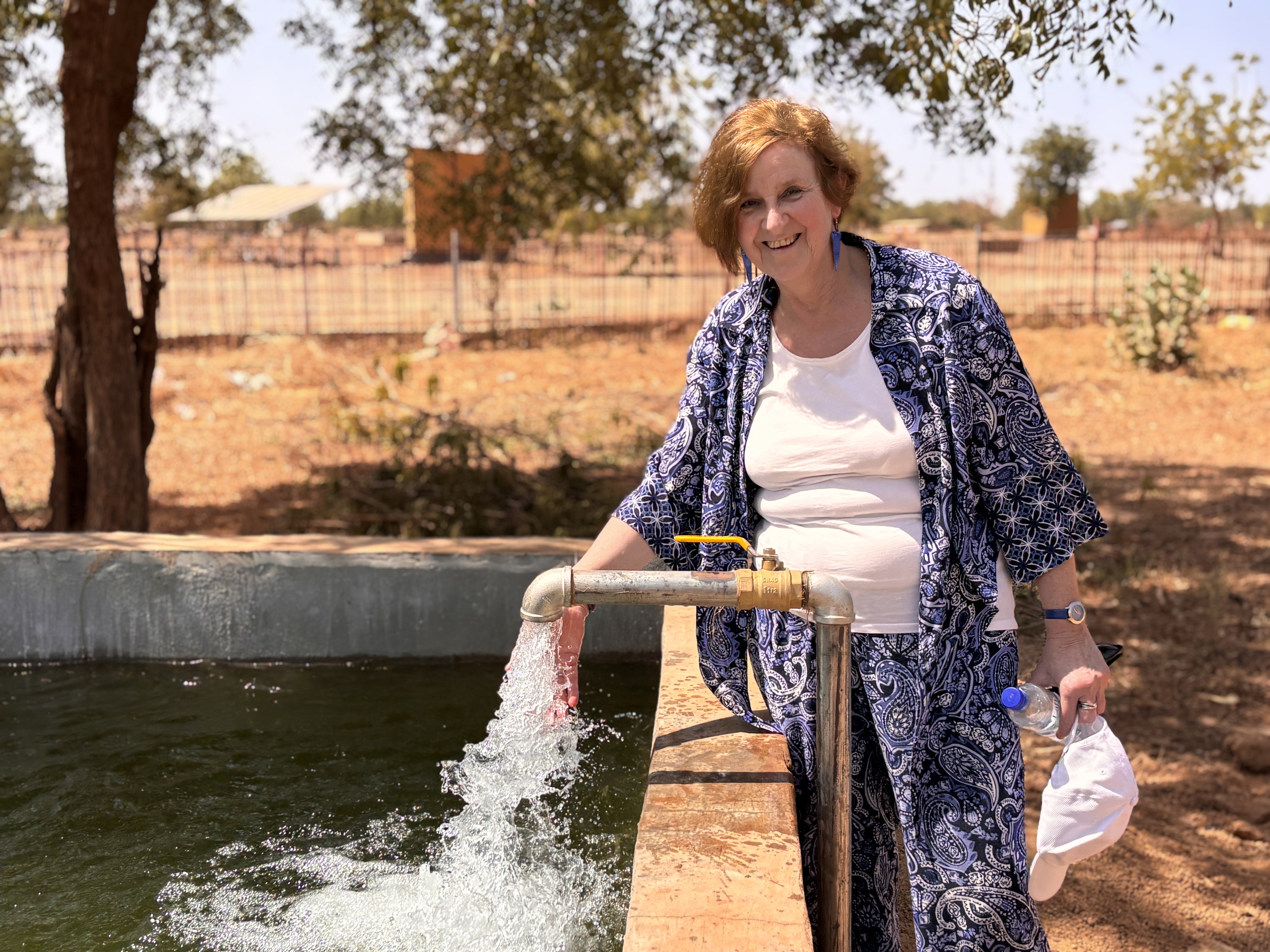
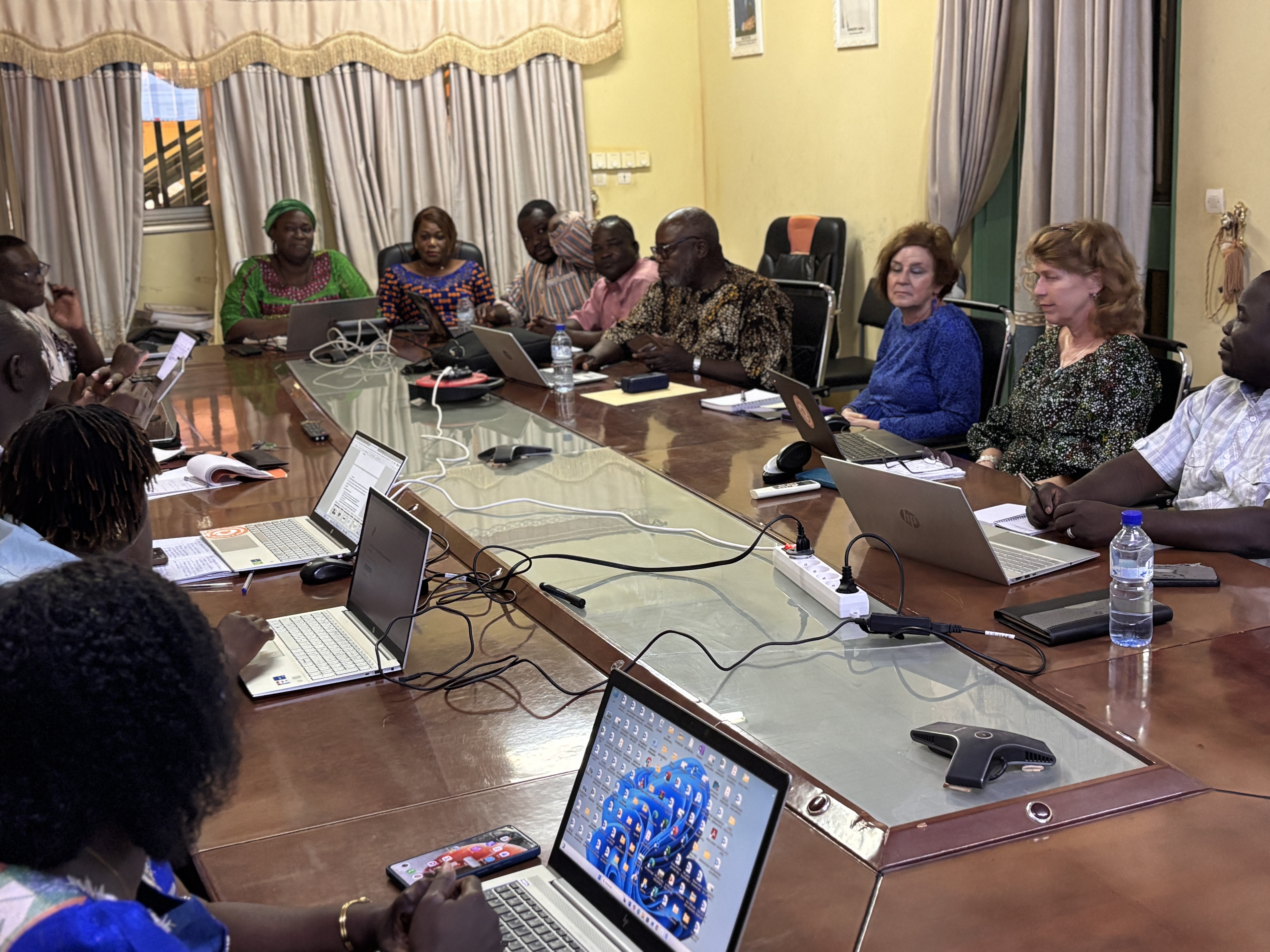
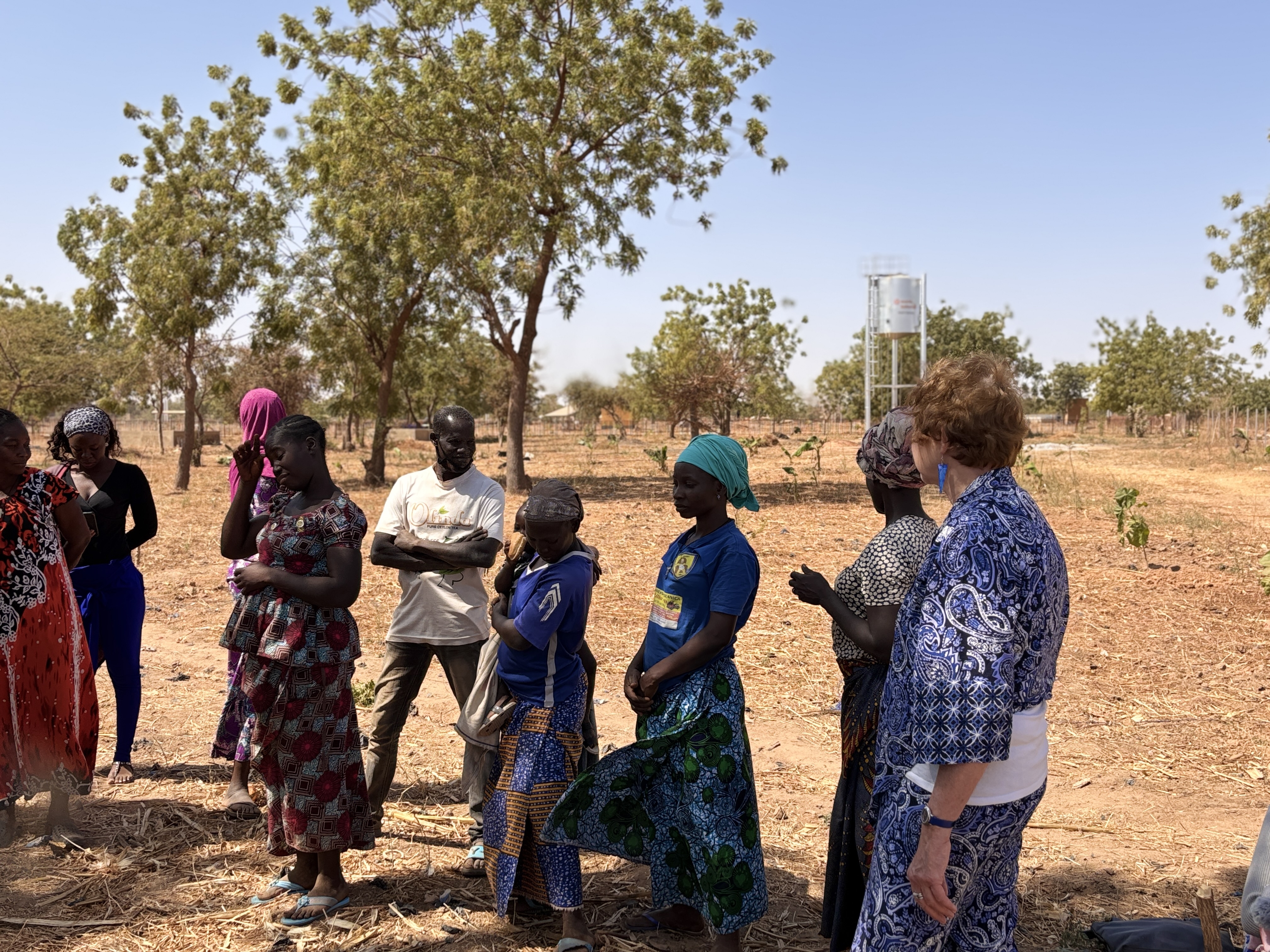
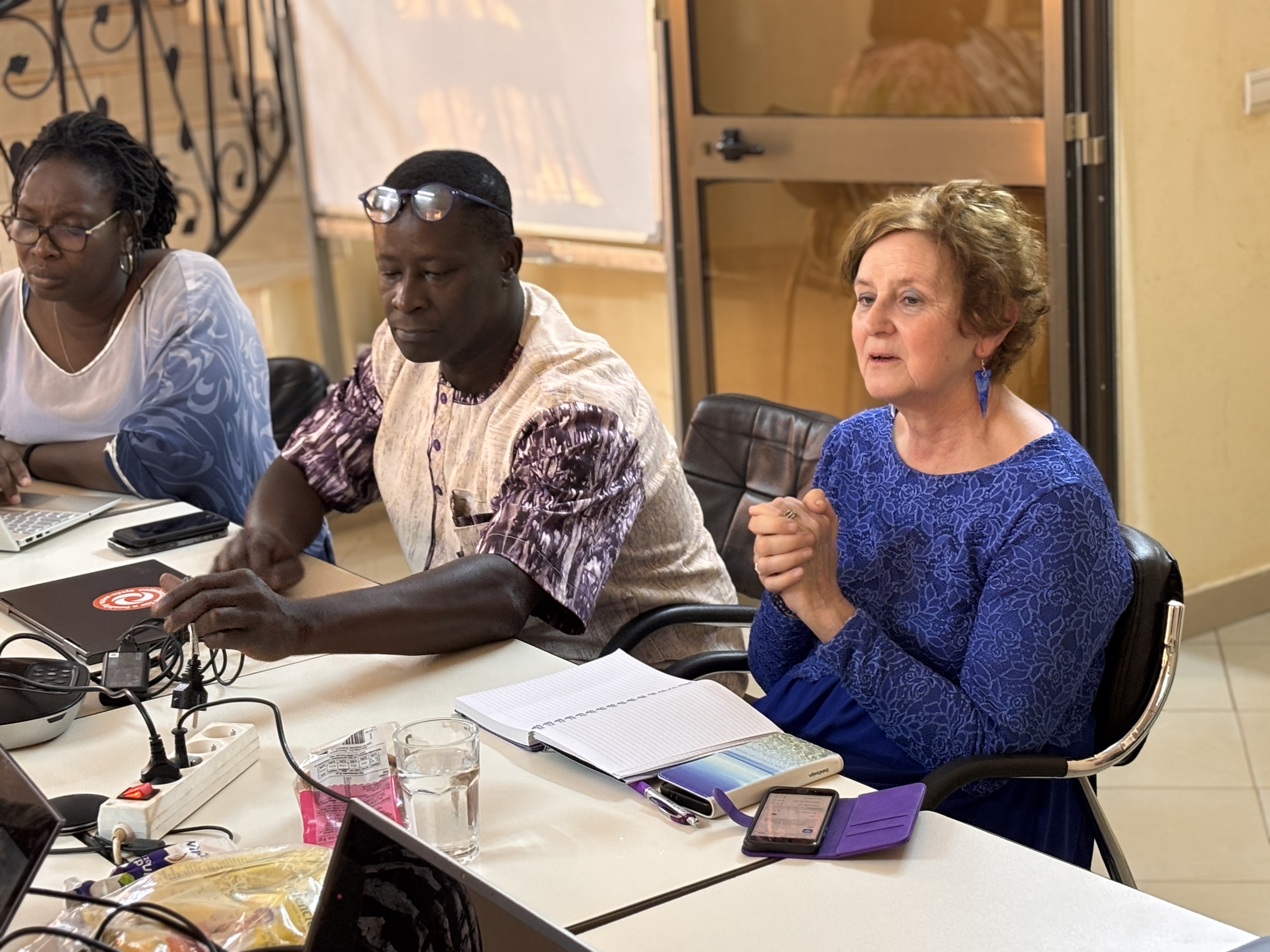
Last week, we had the pleasure of welcoming Sophieke Kappers, the new Project Manager of the ECDD GIRE project, on her first mission to Burkina Faso. Her visit marked an important milestone for the project, bringing together the national team, the consortium partners and other local stakeholders to review progress and plan the next phase.
During her stay in Burkina Faso, Sophieke met with the national project team to discuss strategic priorities and participated in the meeting with the Water Authority of Nankabé and two CLEs of Massili and Ziga Amon to discuss cooperation and the annual plan and activities.
We spoke with Sophieke about her journey into the water sector and the experiences that shaped her approach to international cooperation.
A long-standing commitment to water
“My name is Sophieke Kappers, and I will be the Project Manager for the ECDD GIRE project. My work focuses on the strong interaction between agriculture, water management, nature-based solutions, and biodiversity. I have always specialised in working at these intersections and collaborating with diverse stakeholders. This GIRE project is about this integrated approach.
It brings together water resources management, agricultural practices, nature-based solutions and access to finance. Combining these dimensions comes with a degree of complexity. So it is exactly what makes the project both challenging and meaningful.”
From early involvement to an international perspective
“My interest in water began early. In secondary school, I organised a fundraising campaign for a drinking well in India. We sold tompouce, a type of Dutch pastry, for double the purchase price and donated the profits to this project. That experience showed me how essential water is and how closely it is linked to many other aspects of life.
At the same time, I was always interested in international contexts and cultures. At first, I wanted to study anthropology because I was fascinated by different cultures. But I wanted a field that would allow me to apply this interest in a practical way.”
Learning to see the bigger picture
“So I decided to study agricultural development economics at the University of Wageningen, which is well known for its international expertise and cooperation.
During my traineeship, I lived in rural Eswatini (formerly Swaziland). Living and working with both female and male local farmers gave me a completely new perspective. It taught me that challenges can be viewed in many different ways, a lesson that continues to guide my work.
My study covered several areas of expertise, as it prepared us to become project managers. We learned about economics, law, anthropology, sociology, agriculture, irrigation and animal health. I appreciated learning how to integrate different areas of expertise. If I had the choice, I would study it again, because it is so interesting to collaborate across disciplines to solve complex challenges.”
Working at the intersection of agriculture, water and nature
After graduating, she lived and worked in Niger for four years on an integrated rural development project. The project focused on agriculture and horticulture, building wells for drinking water, setting up irrigation for horticulture, introducing cereal banks, and reducing soil erosion through the construction of demi-lunes by local communities.
“After Niger, I worked with a wide range of stakeholders and ran my own consultancy firm. Most of my work has been international, focusing on the intersection of agriculture, water, and nature. Each context presents unique water management challenges, which have taught me to approach every situation with an open mind.”
Nature-based solutions in practice
An interesting example of my work took place in Sudan and focused on combining the implementation of gum Arabic trees with the annual crop guar in an agroforestry system. The gum Arabic tree improves water retention and provides shade, while guar fixes nitrogen and improves soil quality. What makes this example of agroforestry especially valuable is that it also supports local economies. Communities can generate income by selling guar seeds and using the plant as animal feed. The gum Arabic is sold for use in the food, paper, and textile industries. These approaches strengthen both environmental sustainability and livelihoods.
Cooperation, rather than prescription
“While many projects share common features, I am careful not to impose solutions. I do not want to arrive as an outsider claiming to have all the answers. Burkina Faso belongs to its people: they understand their country, history, and context better than anyone.
Our role is to provide expertise when requested and to respond to local needs. The Netherlands has extensive experience in water management, and we can contribute valuable knowledge. However, this contribution should always be based on partnership and demand, not prescription.”
Ensuring sustainability beyond the project
“For me, the concept of sustainability is central to my work. We must always ask what happens to the activities after the donor funding ends. That is why it is so essential to look beyond the project timeline. I often refer to the “FIETS” concept, the Dutch word for bicycle, which frames sustainability in five dimensions: Financial, Institutional, Economic, Technical, and Social. If one of these five aspects is weak, the project and its activities are at risk.”
Why the ECDD-GIRE project resonates
“So this project builds directly on my expertise and knowledge. That is what I find interesting about this GIRE project, as it integrates different aspects: water management, agricultural practices, and agroforestry, and is strongly locally driven. I value that external expertise is used selectively, only when it adds real value. I strongly believe in this approach.”