This white paper examines the case of Salfit, exploring how rainwater harvesting can be designed to enhance water independence while remaining economically viable within local constraints. From September 2024 to August 2025, World Waternet and its partners tested three rainwater harvesting system types tailored to Salfit’s landscape, economy, and available construction skills. The paper bellow provides a detailed account of the design process, decision-making criteria, and technical and economic reasoning behind the selected pilot solutions, offering practical insights for context-specific RWHS implementation elsewhere.
What is the right context for rainwater harvesting
Rainwater harvesting systems (RWHS) are not a new concept, but their relevance is growing as water security becomes increasingly vulnerable to climate-related shocks. When applied in the right context, RWHS can diversify water services, strengthen local water independence, and improve resilience. Potential benefits include reduced pressure on centralised supply systems, lower energy consumption and greenhouse gas emissions, improved access to water in remote or underserved areas, and, in some cases, lower lifecycle costs compared to conventional alternatives.
The efficiency of RWHS
However, the effectiveness of rainwater harvesting is entirely context dependent. In cities with mature, well-functioning water networks, RWHS are often not economically viable, or the energy and maintenance costs outweigh the benefits of substituting centralised supply. Local rainfall patterns, building typologies, construction capacity, and storage requirements all play a decisive role in feasibility. Regulatory frameworks can further enable or restrict implementation, with legislation in some countries actively promoting rainwater harvesting, while in others limiting or prohibiting its use altogether. There is no one-size-fits-all solution.
Why rainwater matters here
Salfit receives more rain than most West Bank cities, but almost 60 percent of its drinking water is imported. When supply is external, uncertainty is internal. One local engineer put it plainly: “We have water today, but we never know about tomorrow.”
Rainwater Harvesting is not new in Palestine. Cisterns once stored winter rain for summer. RWHS were forgotten as piped networks expanded. But with growing pressure on aquifers and shifting rainfall patterns, the old ideas feel new again.
Our new white paper explores how rainwater harvesting can support water independence, offer households more control, and relieve stress on groundwater.
A pilot with people at the centre
From September 2024 to August 2025, World Waternet and partners began testing three RWH system types that fit Salfit’s landscape, economy, and construction skills. The goal was simple:
Make it easy, affordable and desirable for households to capture and use rainwater.
The first installations are already in place:
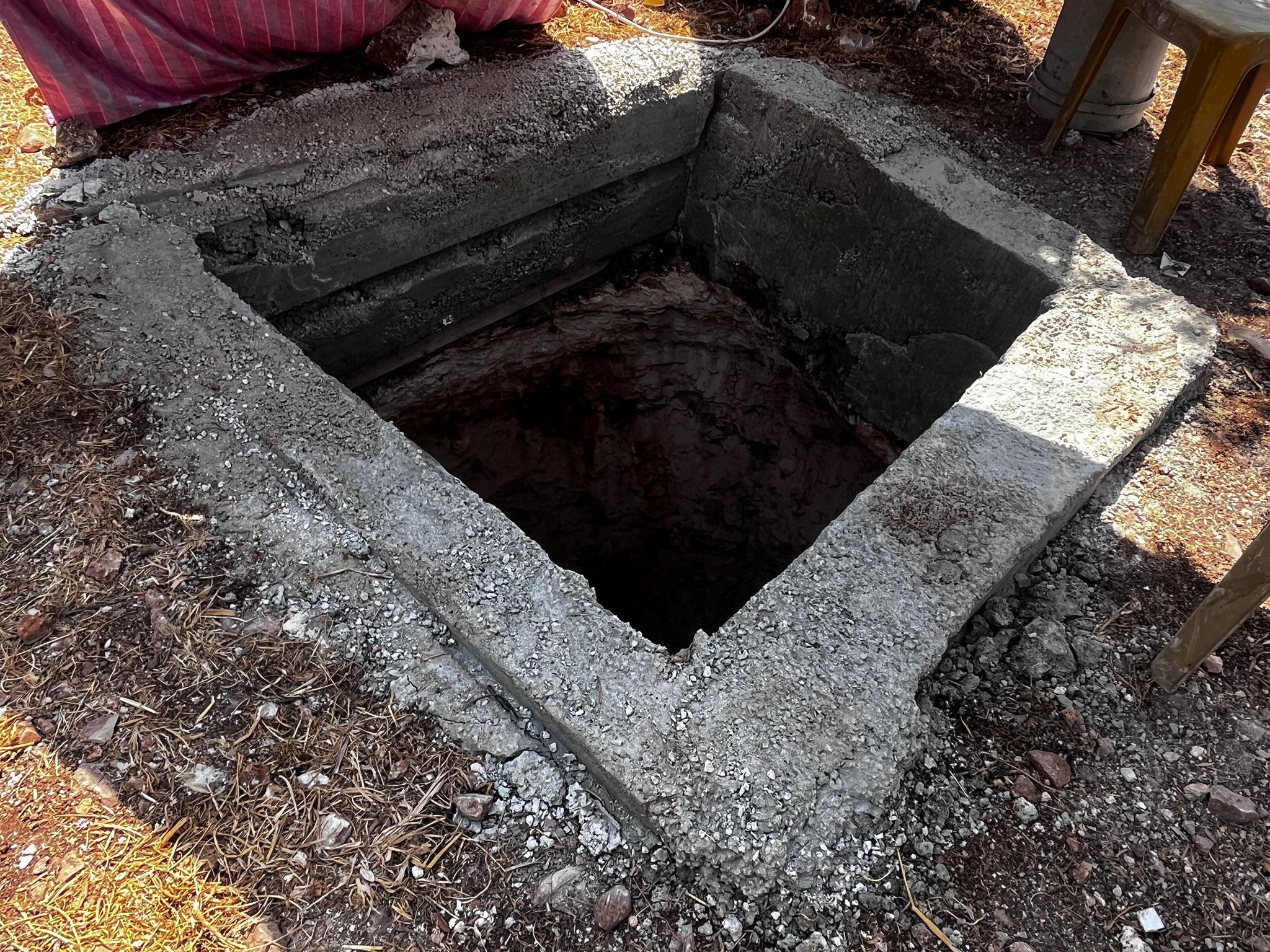
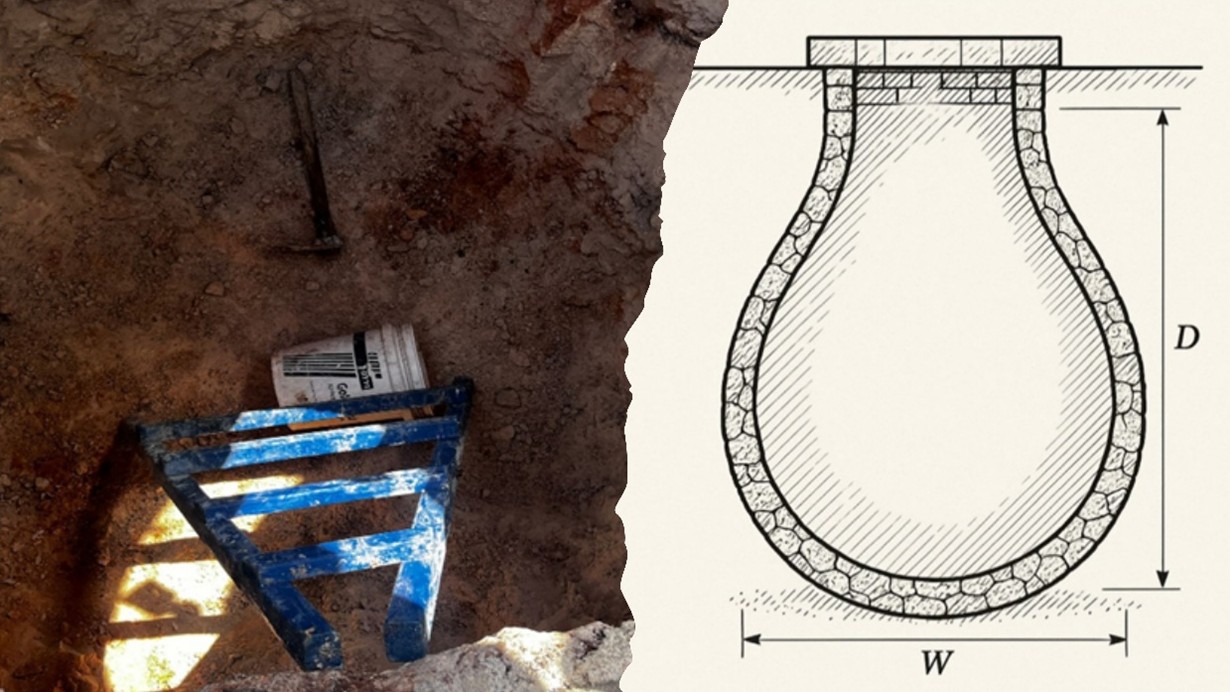
• a 30 m³ underground pear-haped well for a woman farming crops and raising livestock
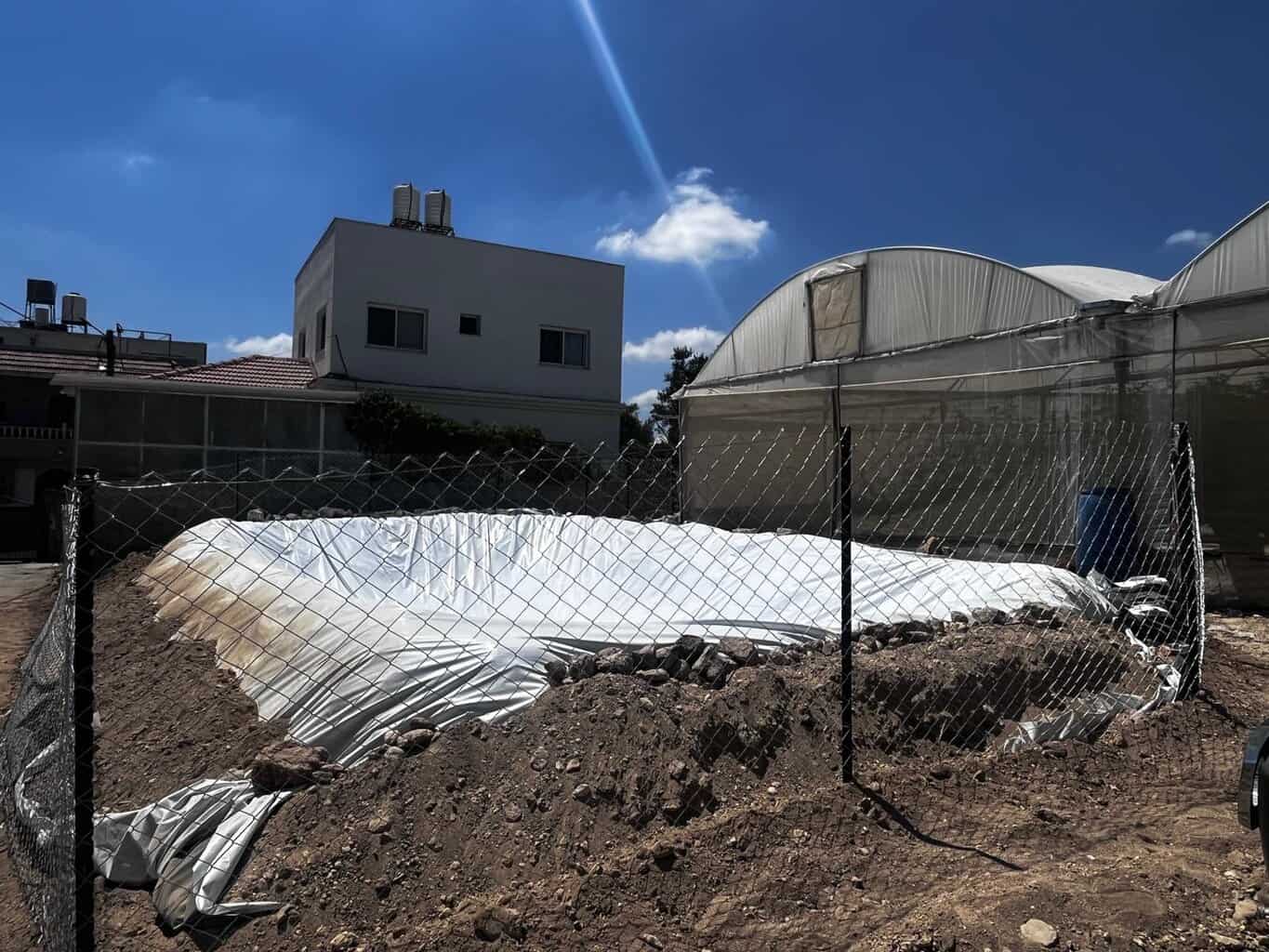
• a 110 m³ agricultural pool supporting three greenhouse farmers during dry months
• RWH systems in local schools, turning saving water into a learning journey
Constructive conversations
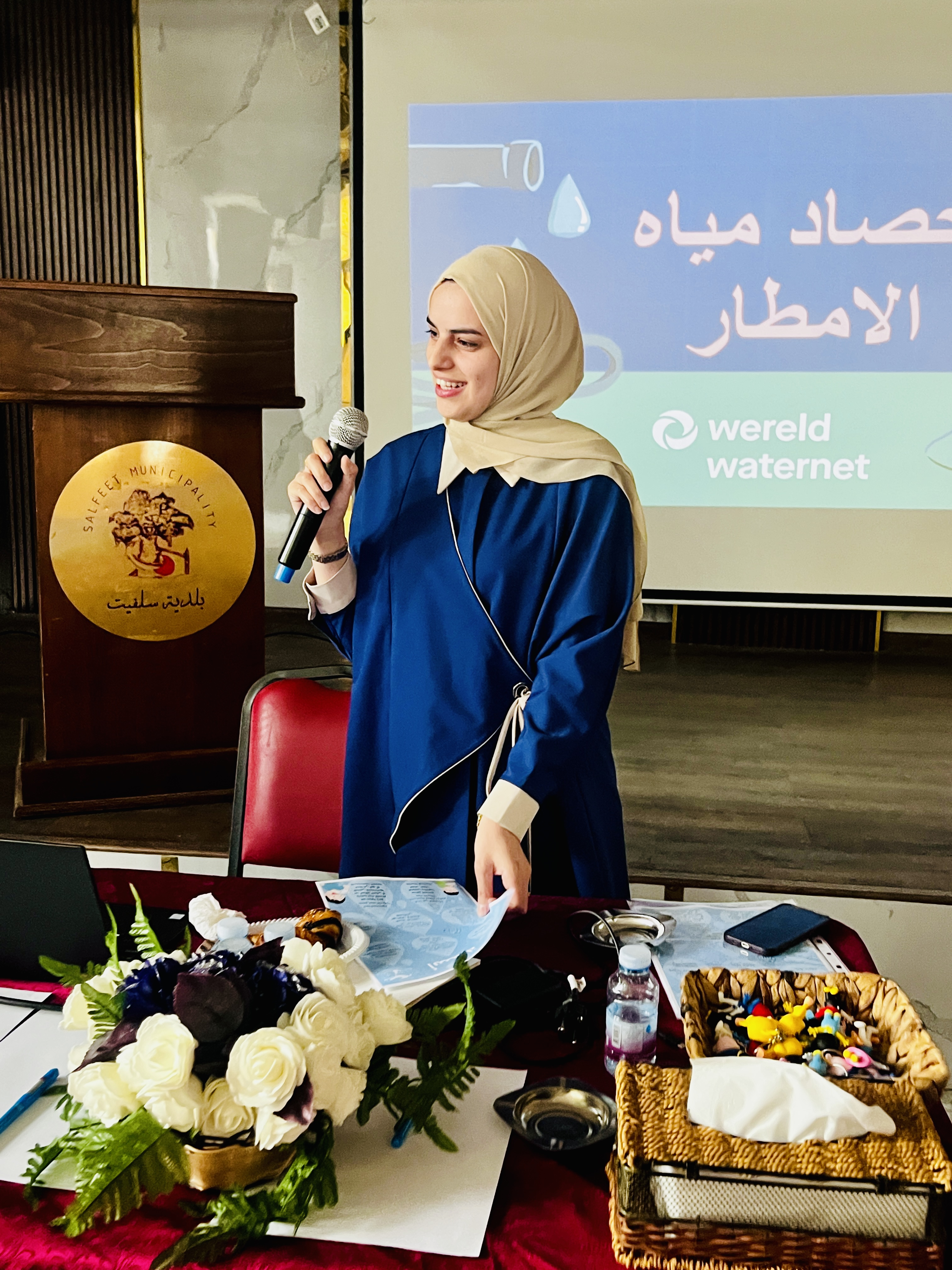
We knocked on doors, spoke with residents, ran a high-school competition, and held workshops with farmers. Most people saw RWH as a helpful add-on rather than a replacement for tap water, especially for gardening, cleaning or irrigation. That insight matters; real change begins with acceptance.
What could come next
Early findings suggest the potential is big. With an estimated €200,000, Salfit could expand to:
30 wells + 75 agricultural pools + 50 rooftop tanks, saving up to 60,000 m³ of water a year.
That means more resilience. More self-reliance. More rain recognised not as a passing cloud, but as a resource.