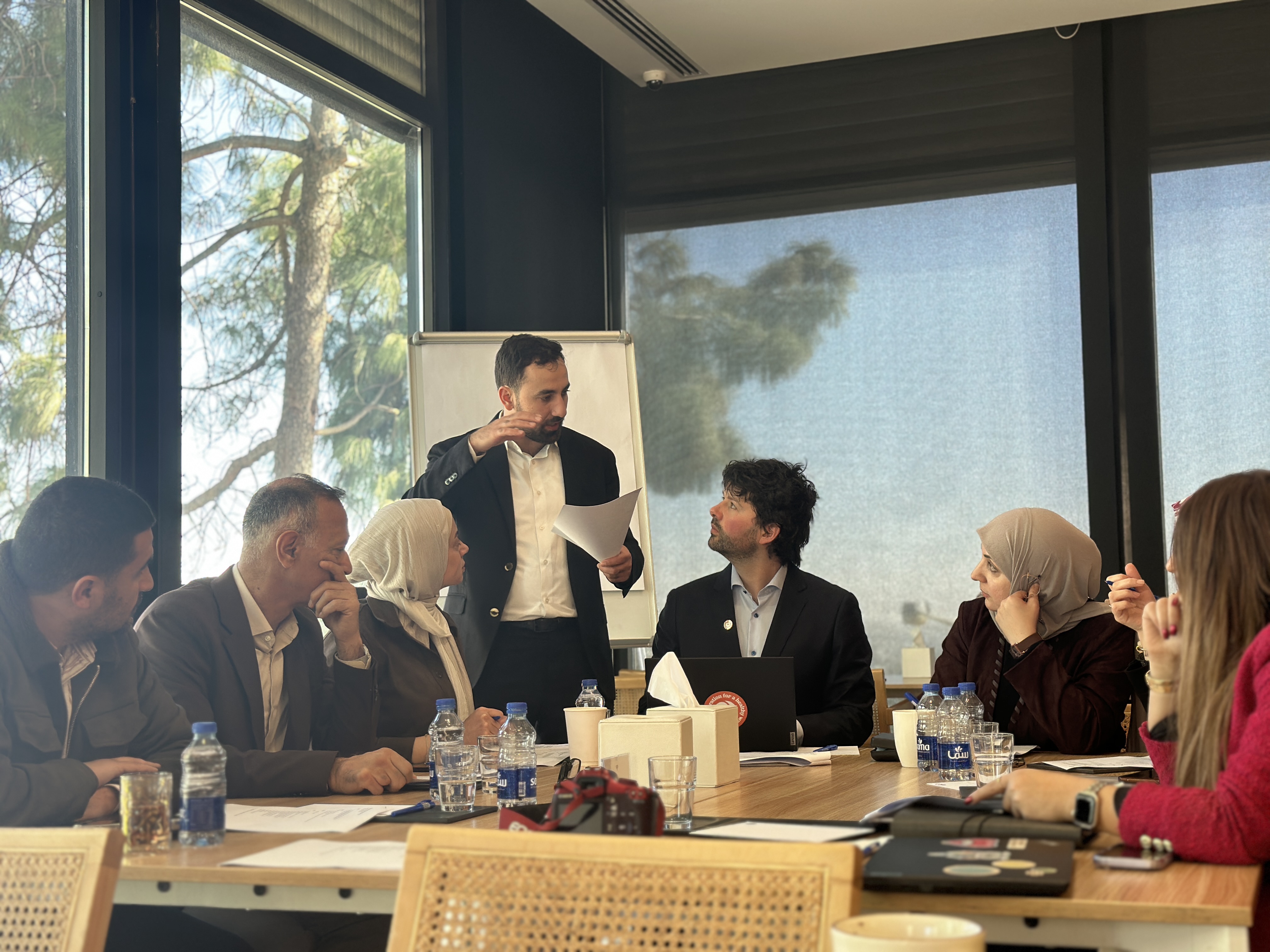
Water is running out in Jordan. In Irbid, a fast-growing northern city, groundwater is extracted nearly twice as fast as it can be replenished, while climate-driven floods overwhelm ageing infrastructure. In response, World Waternet recently signed a Memorandum of Understanding with Yarmouk Water Company and Greater Irbid Municipality to strengthen cooperation on water management and climate resilience. Supported by co-funder NWB Fund, this partnership now takes a concrete step forward with a new initiative that reintroduces and upgrades traditional rainwater harvesting to address both drought and flooding.
From flooding problem to water resource
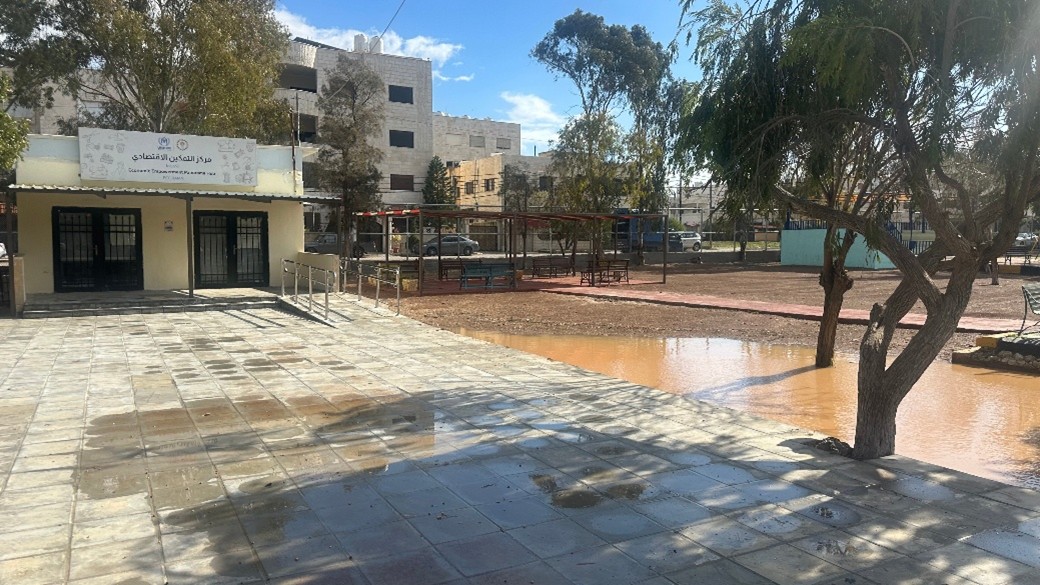
Heavy rainfall in Irbid increasingly leads to stormwater flooding streets and flowing into the sewer system, causing overflows and water quality issues, a challenge Amsterdam is also familiar with. At the same time, the city faces prolonged droughts and limited drinking water supply. The project turns this paradox into an opportunity by capturing rainwater where it falls, particularly from rooftops of public and community buildings such as schools and health centres.
By diverting clean rainwater away from the sewer network and storing it for later use, the initiative reduces pressure on wastewater systems while creating an additional local water source for non-potable uses such as irrigation, cleaning and washing.
Building on local knowledge and Salfit experience
Rainwater harvesting is deeply rooted in Jordan’s history as a way to cope with limited water availability. The project revives these traditional techniques and adapts them to today’s urban context. Local artisans and community members will be closely involved in designing, building and maintaining the systems, ensuring that solutions are practical, affordable, and locally owned.
The initiative builds on earlier experience in Salfit, where similar approaches combining traditional knowledge and modern engineering proved effective. Lessons learned there are now being adapted to Irbid’s specific urban and climatic conditions.
“Rainwater harvesting used to be a normal part of daily life in Jordan, and we are now revitalising that practice for today’s climate challenges. Together with the municipality, Yarmouk Water Company and local communities, we are making better use of the rain that already falls on the city instead of letting it become a seasonal problem. These are solutions people understand, can maintain locally, and that can grow with the city.”
-Ayman Kassem, Project Manager Jordan, World Waternet
Practical benefits for households and the city: lowering water bills
The project also promotes innovative combinations of rainwater harvesting with rooftop solar panels, which are increasingly common in Jordan. By collecting rainwater along the lower edge of solar panels and storing it in tanks, households and institutions can reduce reliance on municipal supply. In Irbid, this approach has already shown the potential to lower household water bills by up to 50 per cent.
In addition, harvested rainwater will be used to support small-scale urban greening around pilot sites. This helps improve environmental quality and mitigate the urban heat island effect, contributing to more liveable neighbourhoods.
A partnership for long-term water resilience
The initiative is embedded in long-standing cooperation between Dutch water expertise and Jordanian institutions. World Waternet has worked with Yarmouk Water Company in northern Jordan since 2016, building strong ties with both the utility and the Municipality of Irbid. Yarmouk Water Company will provide technical guidance and in-kind support, while the municipality and ministries ensure alignment with urban planning and water management policies.
“We are thrilled to launch a groundbreaking model in Irbid that harnesses nature-based solutions and advanced rainwater harvesting techniques, positioning nature as our key partner in addressing water scarcity in the city.”
-Eng. Rabab Ali, Head of Department, Local and International Projects, Irbid Municipality.
A model for scaling across Jordan and the region
Beyond the pilot sites, the project will map rainwater harvesting potential across parts of Irbid and develop practical guidelines for replication. Results and lessons learned will be shared through a workshop and Community of Practice, contributing to learning under regional programmes such as the Blue Deal and WaterWorx.