With support from the Embassy of the Kingdom of the Netherlands in Amman, UN-Habitat Jordan and World Waternet are advancing the Smart Urban Water Management project. The initiative addresses Amman’s growing flood risks and water scarcity using nature-based solutions, green infrastructure, and data-driven approaches. In June 2025, a Jordanian delegation travelled to the Netherlands for a knowledge exchange mission to strengthen Amman’s capacity for climate-resilient urban water management.
Flash floods and urban vulnerability
Rapid urban growth, aging drainage systems, and climate change are putting Amman at growing risk of destructive flash floods. In the past, these floods have paralyzed the city, caused loss of life, damaged infrastructure, and increased vulnerabilities, particularly among the most affected groups, including Syrian refugees.
As the second most water-scarce country in the world, Jordan faces added pressure on its limited water resources. To address these challenges, the Embassy of the Kingdom of the Netherlands in Amman supports the “Smart Urban Water Management: Enhancing the Adaptive Capacity and Urban Resilience of Amman through Urban Green Infrastructure” project. Implemented by UN-Habitat Jordan in partnership with the Greater Amman Municipality and in collaboration with the Ministries of Environment and Water and Irrigation, this initiative combines flood risk reduction with sustainable water management. Rainwater harvesting, a cost-effective and sustainable solution, helps alleviate water scarcity while mitigating flood risks.
Connecting cities: Jordan delegation visits Amsterdam, Rotterdam, and Delft
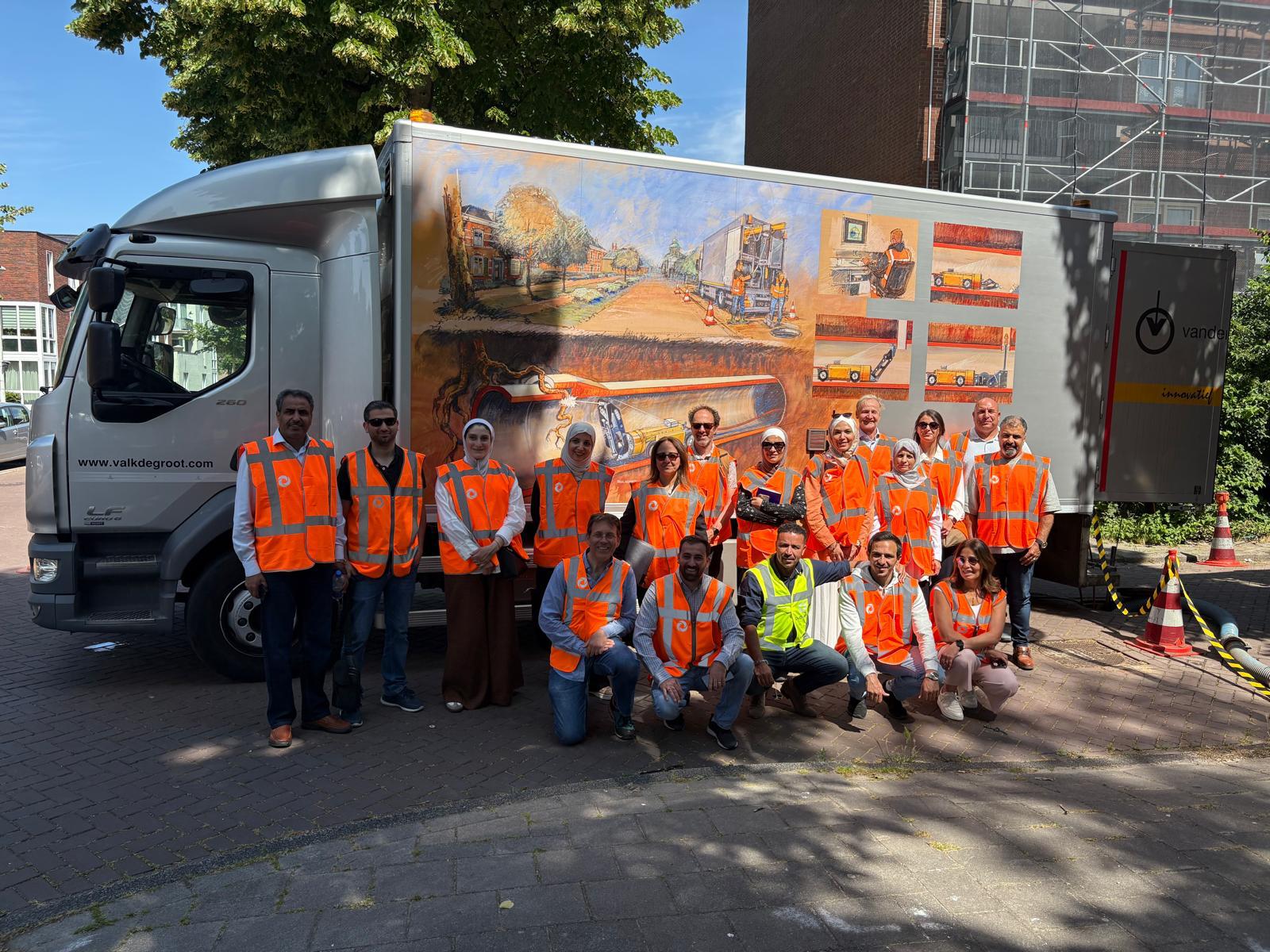
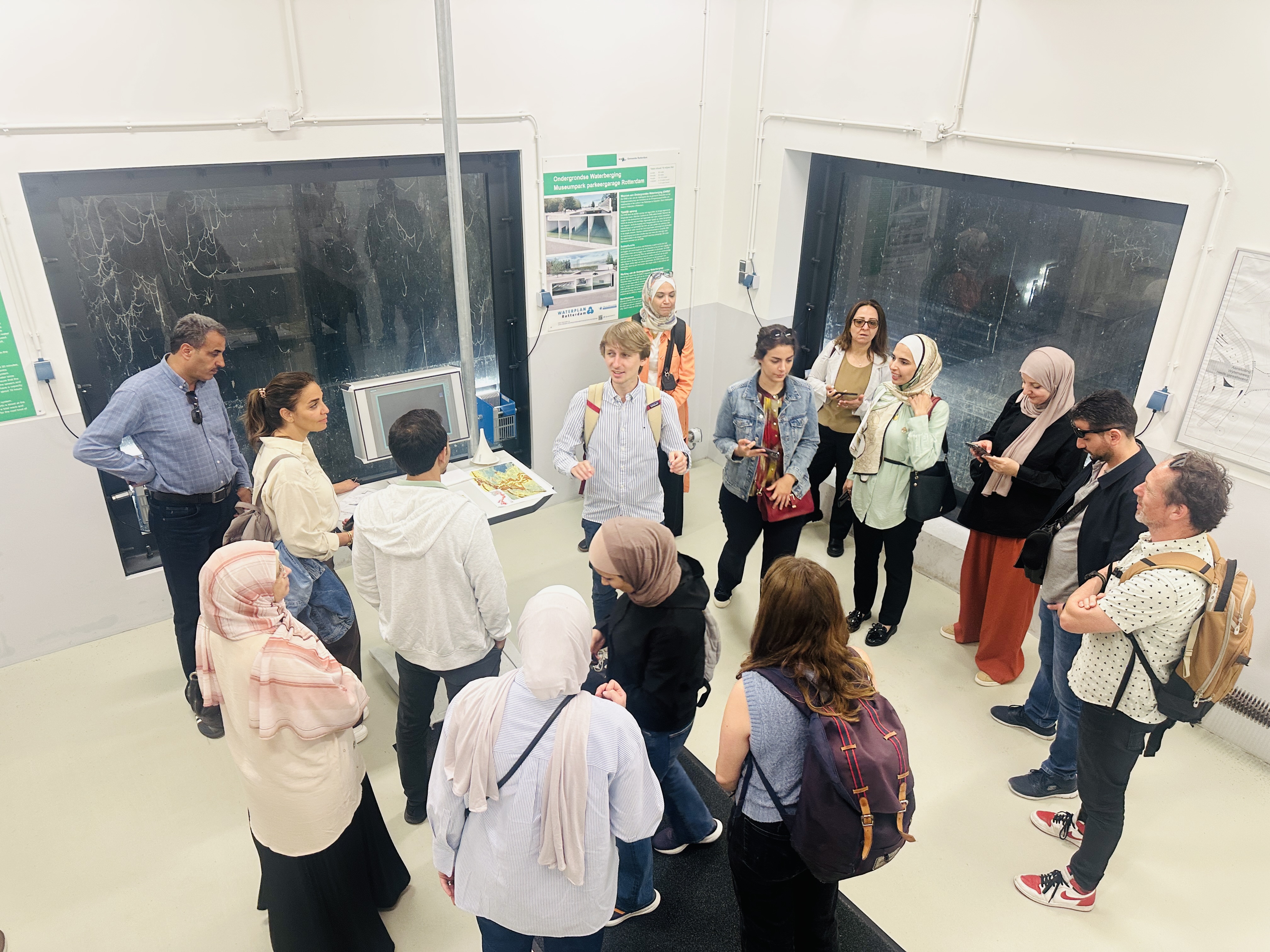
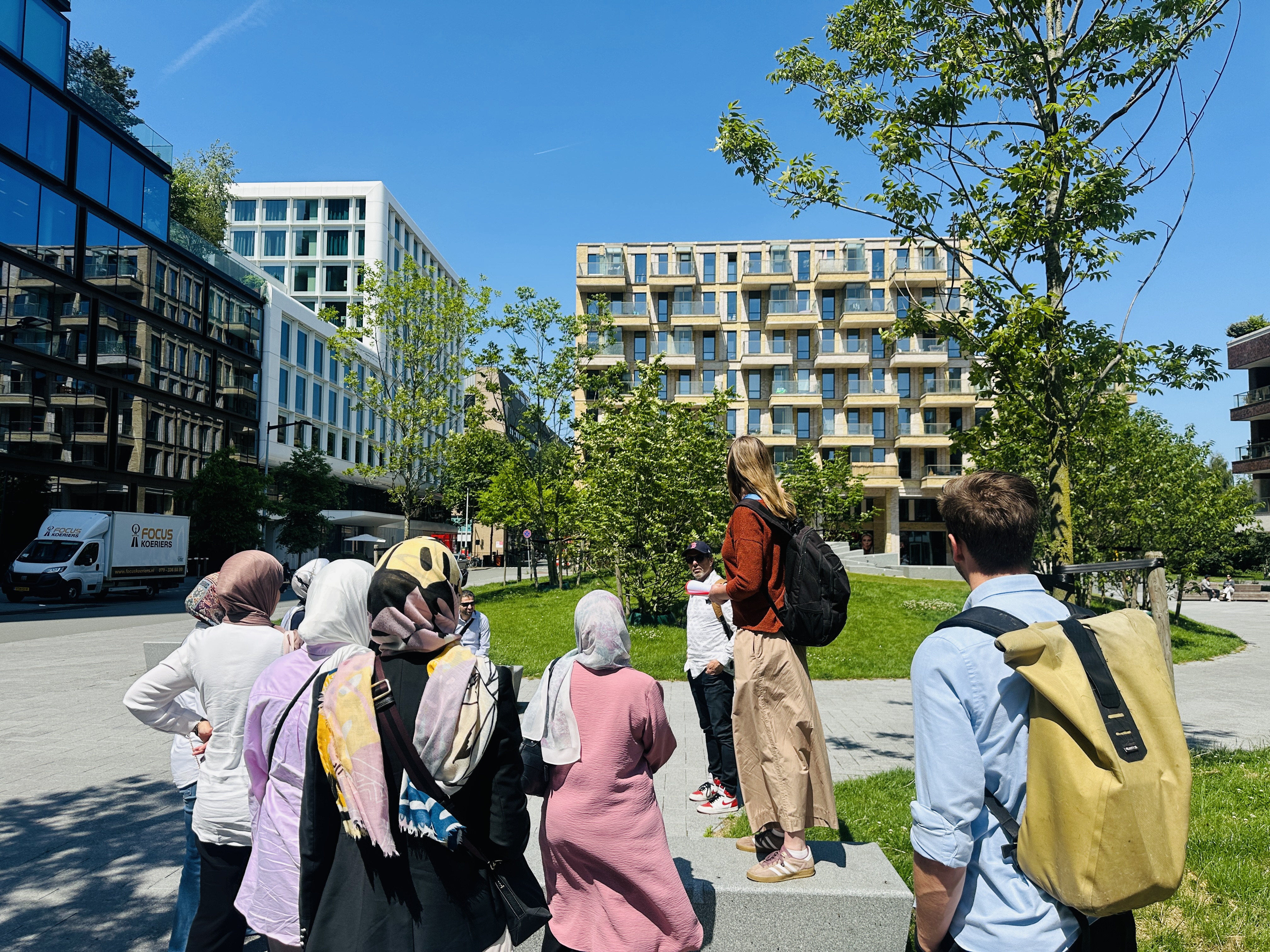
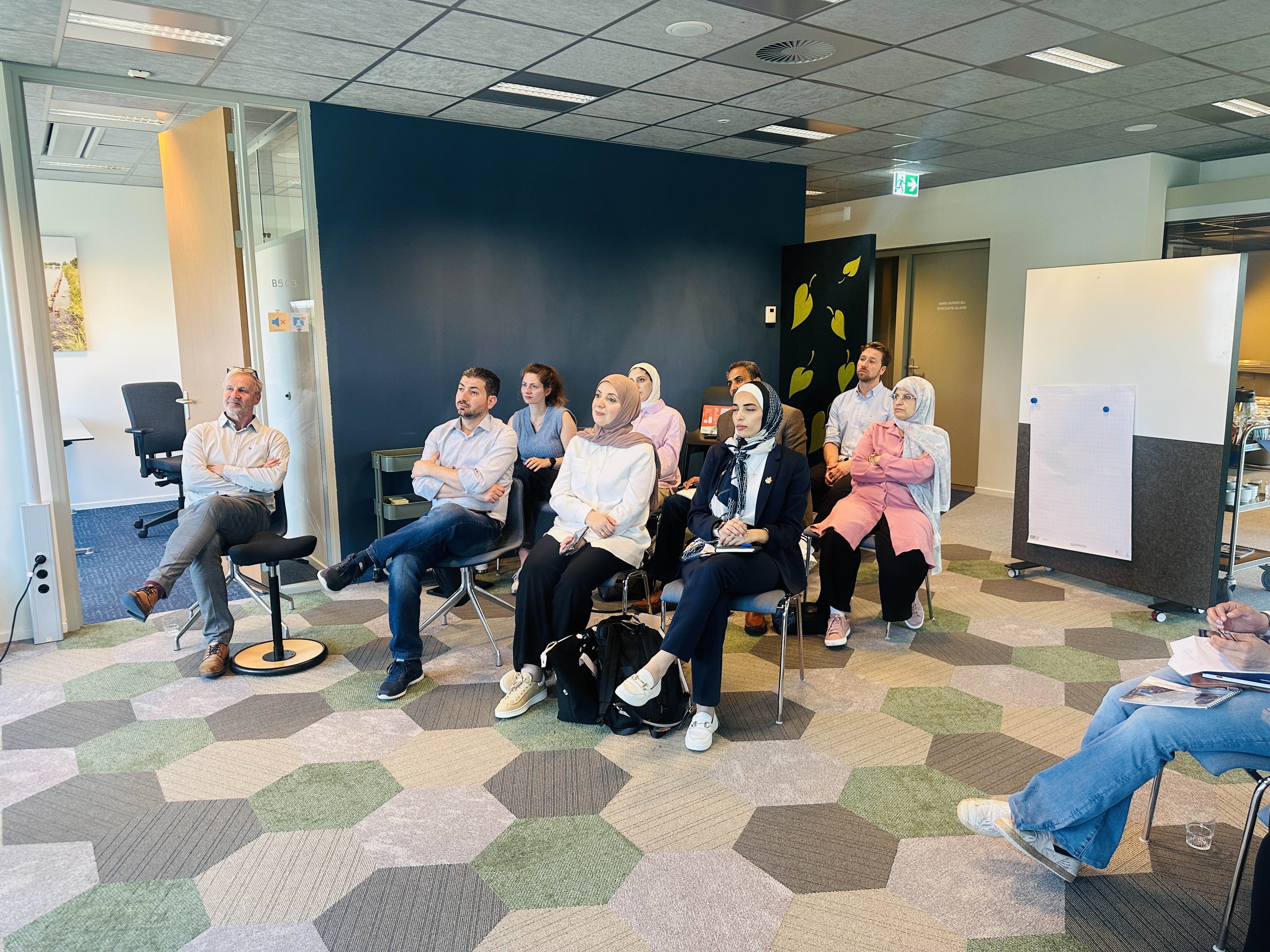
As a major activity under the project, a multi-agency delegation from Jordan travelled to the Netherlands for a peer-to-peer knowledge exchange. The group brought together representatives from the Greater Amman Municipality; the Irbid and Mafraq Municipalities; the Ministry of Environment; the Ministry of Water and Irrigation; the Ministry of Public Works and Housing; and the Royal Society for the Conservation of nature. Through site visits and expert-led workshops in Amsterdam, Rotterdam, and Delft, participants explored Dutch strategies for sustainable drainage, integrated water planning, and climate resilience.
The group engaged with institutions including the Cities of Amsterdam & Rotterdam, Waternet, TU Delft, Erasmus University, the Green Village, the AMS Institute, and Weatherproof. A highlight of the visit was a collaborative design exercise in which participants proposed solutions for a flood-prone Amsterdam street. Delegates studied green rooftops, urban water plazas and infiltration systems, which enhance urban liveability while supporting long-term climate adaptation. Rooftops were transformed into spaces for nature, recreation, water storage, and food production. Infiltration systems demonstrated how various techniques reduce surface runoff and help mitigate flood risks.
Laying foundations for future cooperation and capacity building
Beyond technical exposure, the visit strengthened ties between Jordanian and Dutch institutions. Delegates gained insight into governance models, public-private partnerships, and ways to link local innovation with national strategies. As one participant noted, seeing how Dutch cities turn water risks into opportunities for urban renewal provided valuable perspective and inspiration.
Next, Dutch experts will travel to Amman for a training workshop on sustainable urban drainage and climate-resilient infrastructure, creating space for mutual learning between Jordanian and Dutch professionals. In parallel, the project team is developing a planning and design toolkit titled “Typologies of Urban Green Infrastructure”. This resource will help standardise the implementation of green infrastructure across Amman.
A collective pathway towards climate-resilient cities
This project is a step forward for Amman and a model for cities facing similar challenges. Through international cooperation, capacity development, and the local adaptation of proven techniques, the initiative advances progress on global goals including clean water, climate action, and sustainable urban development.
Partners and stakeholders are encouraged to stay engaged as the project continues to grow, with upcoming activities and knowledge-sharing efforts aimed at building a more resilient and adaptive future for Amman and beyond.